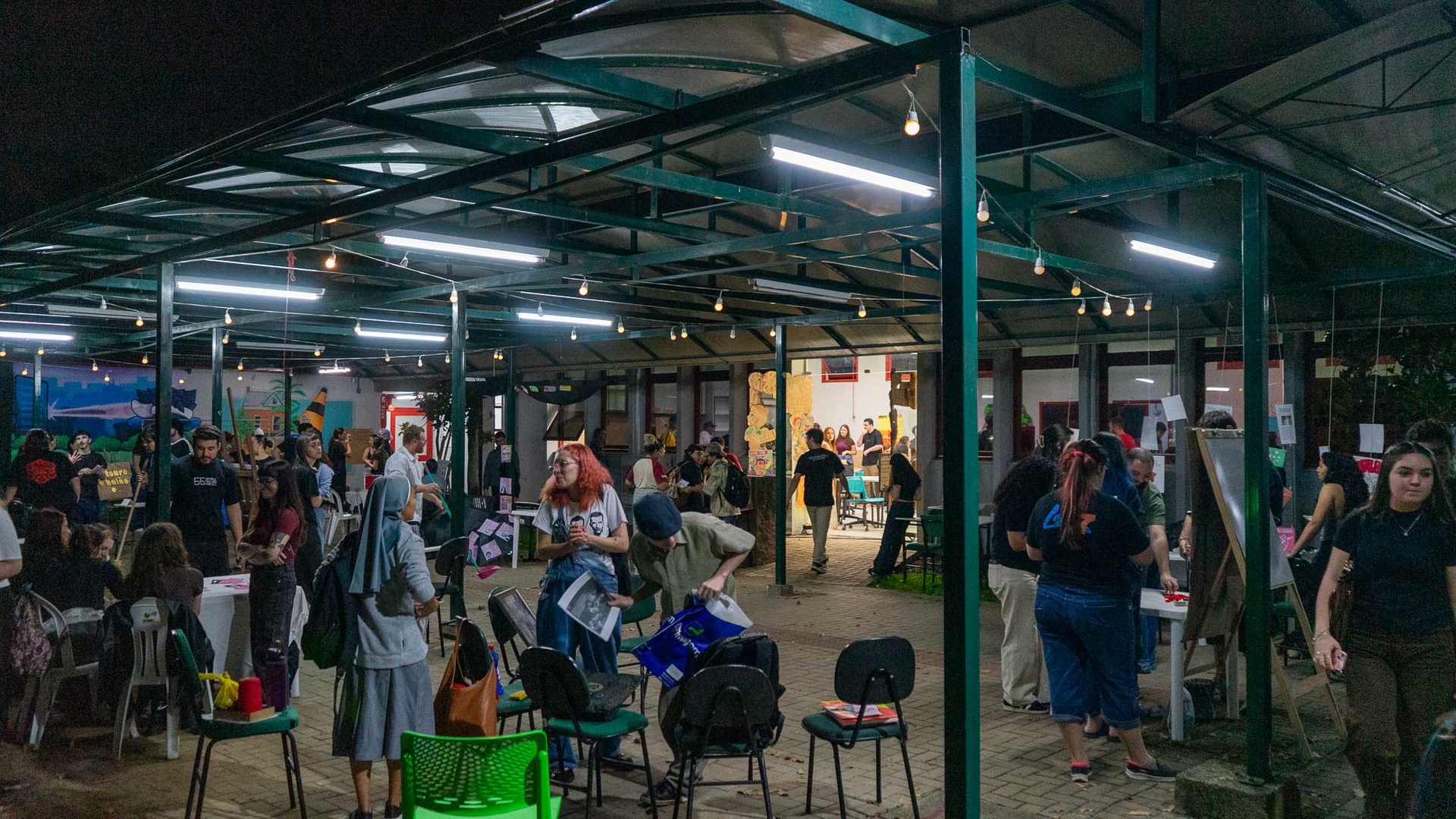
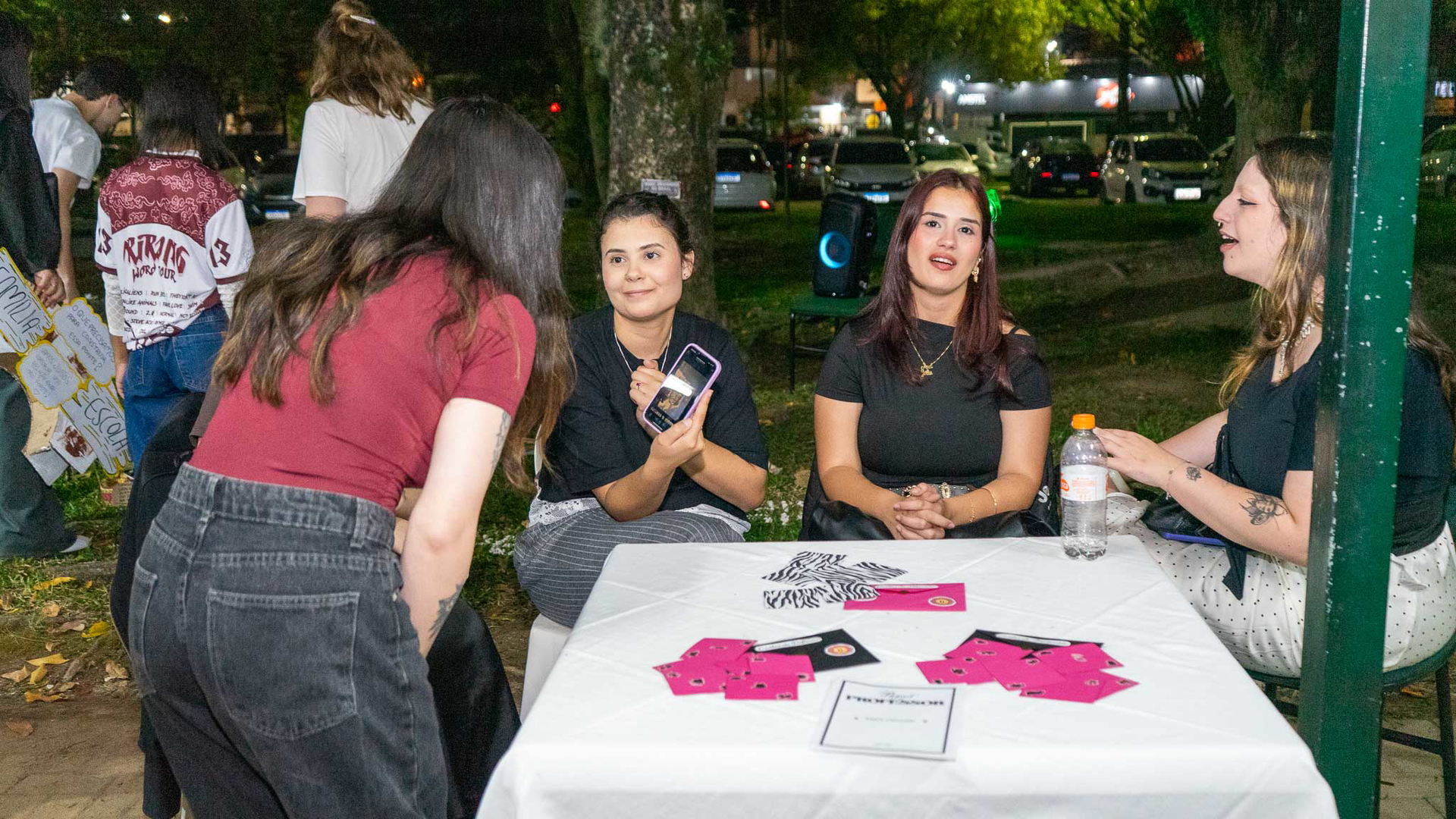
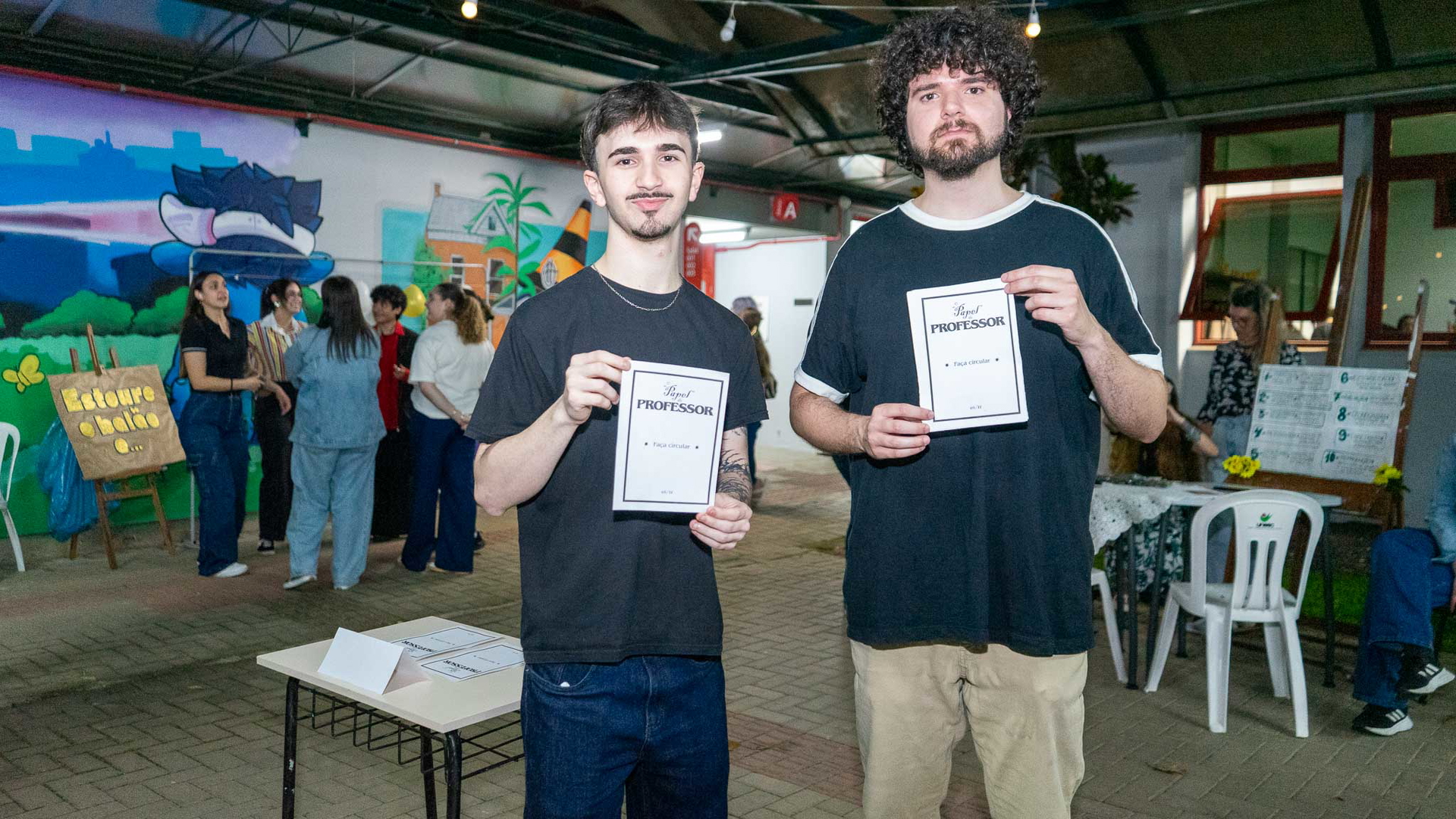
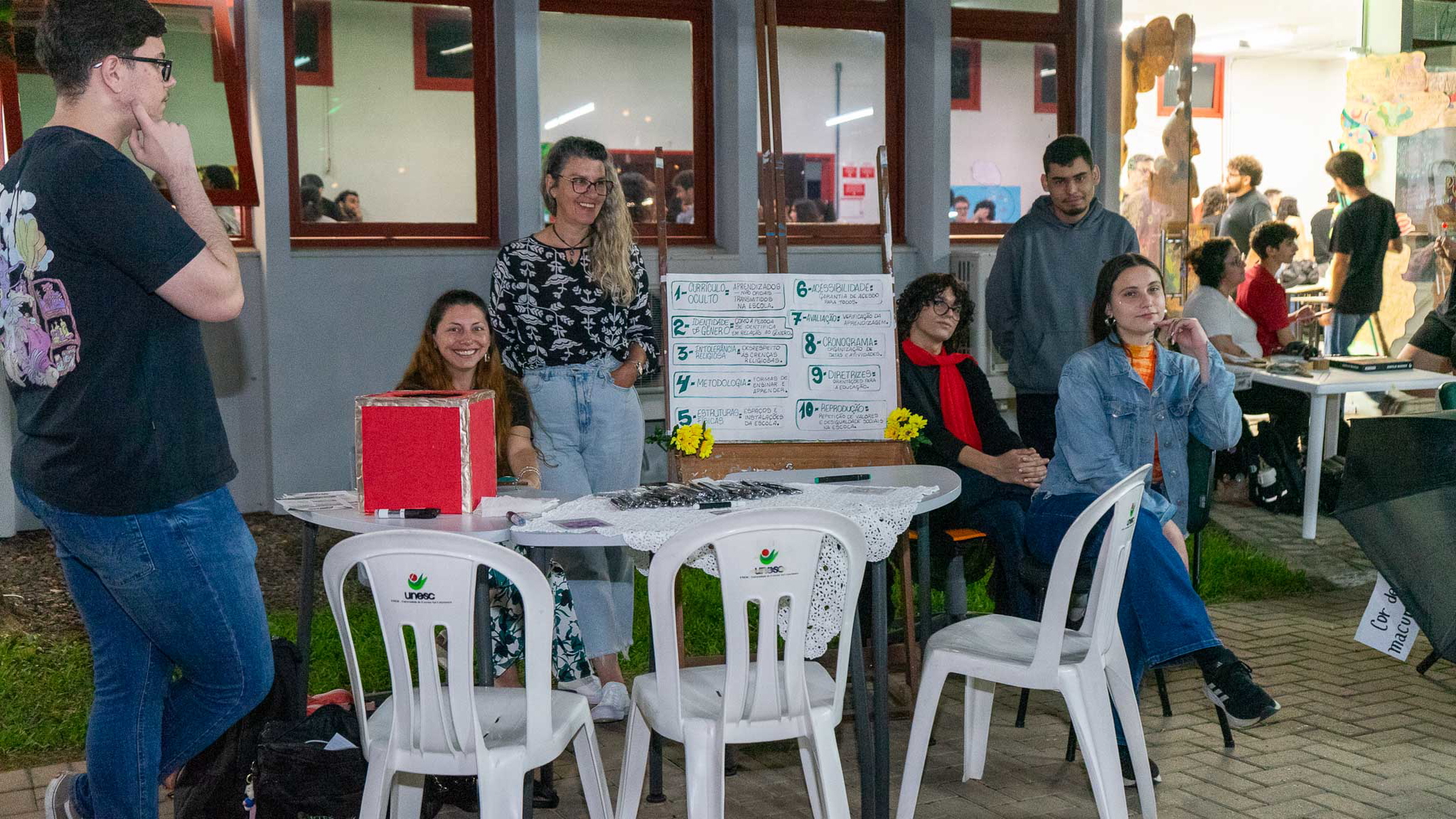
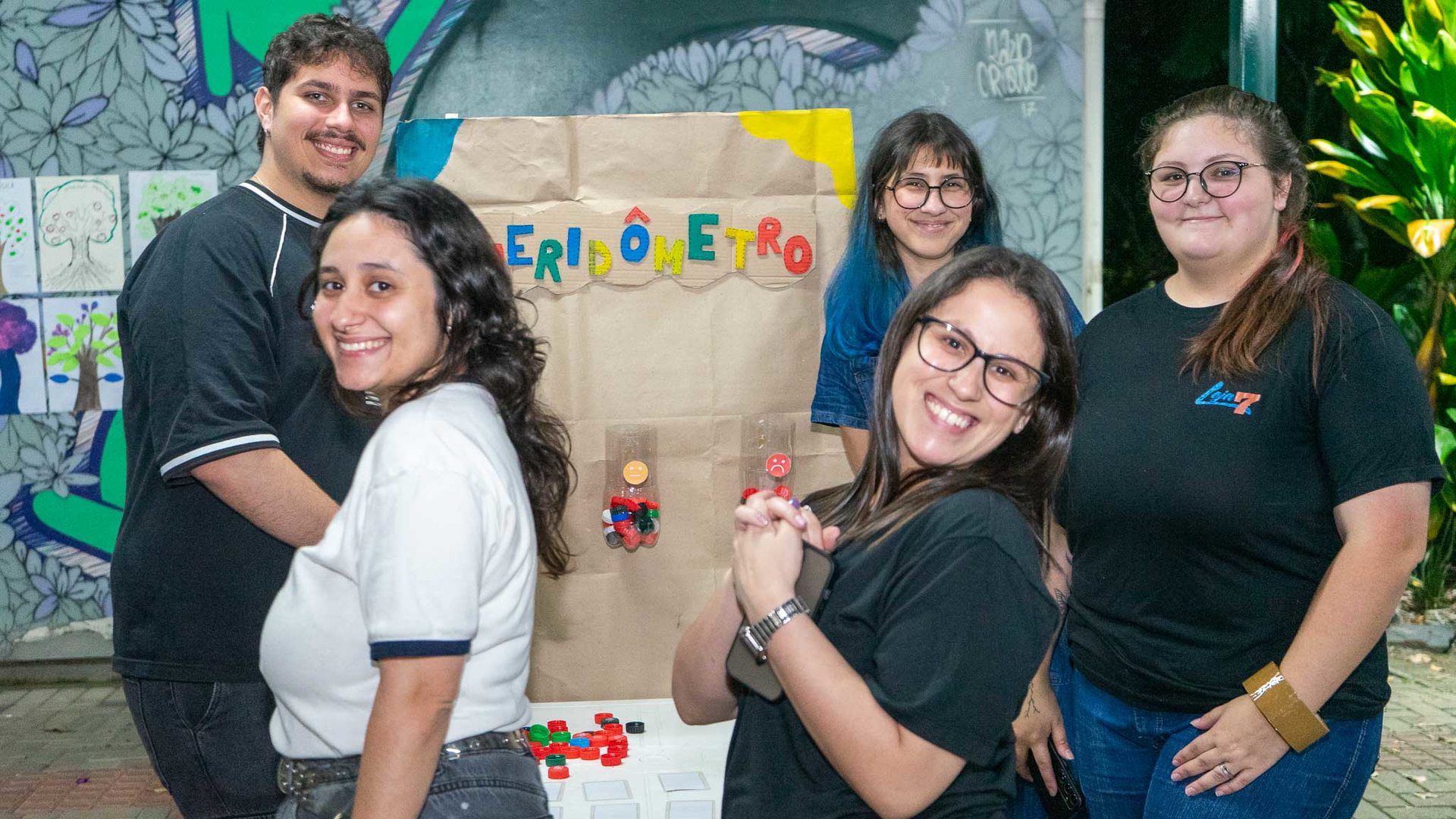
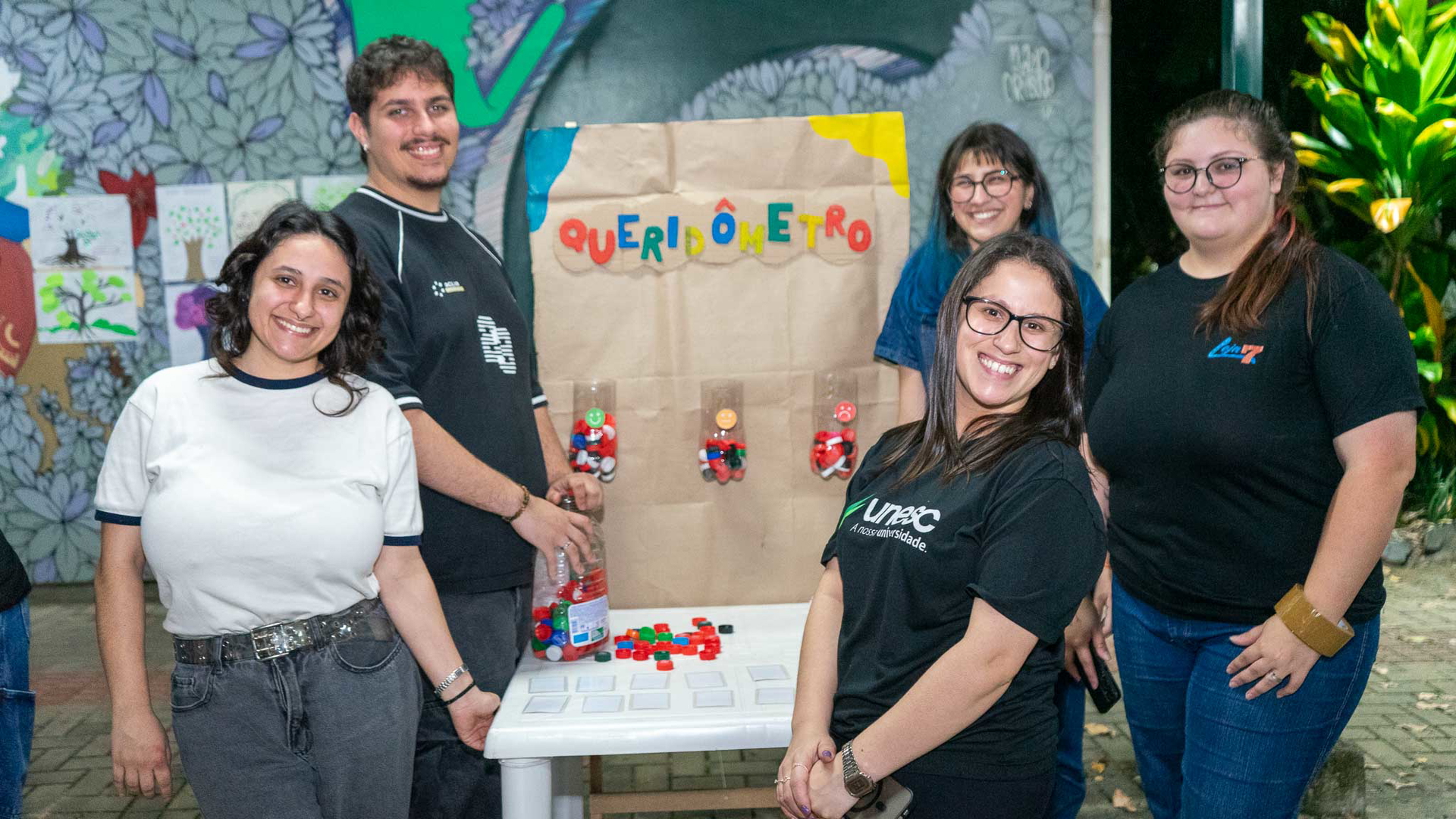
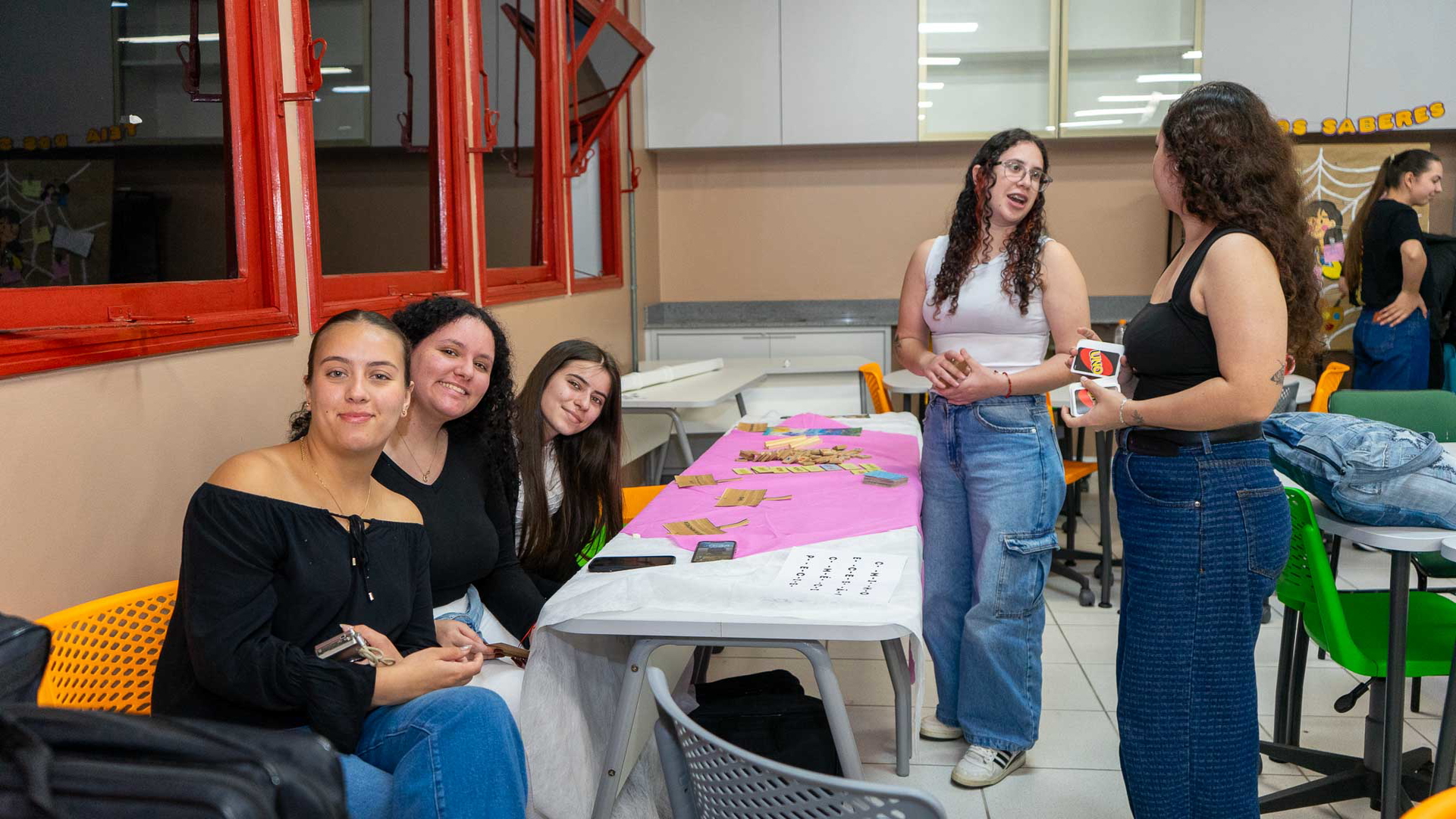
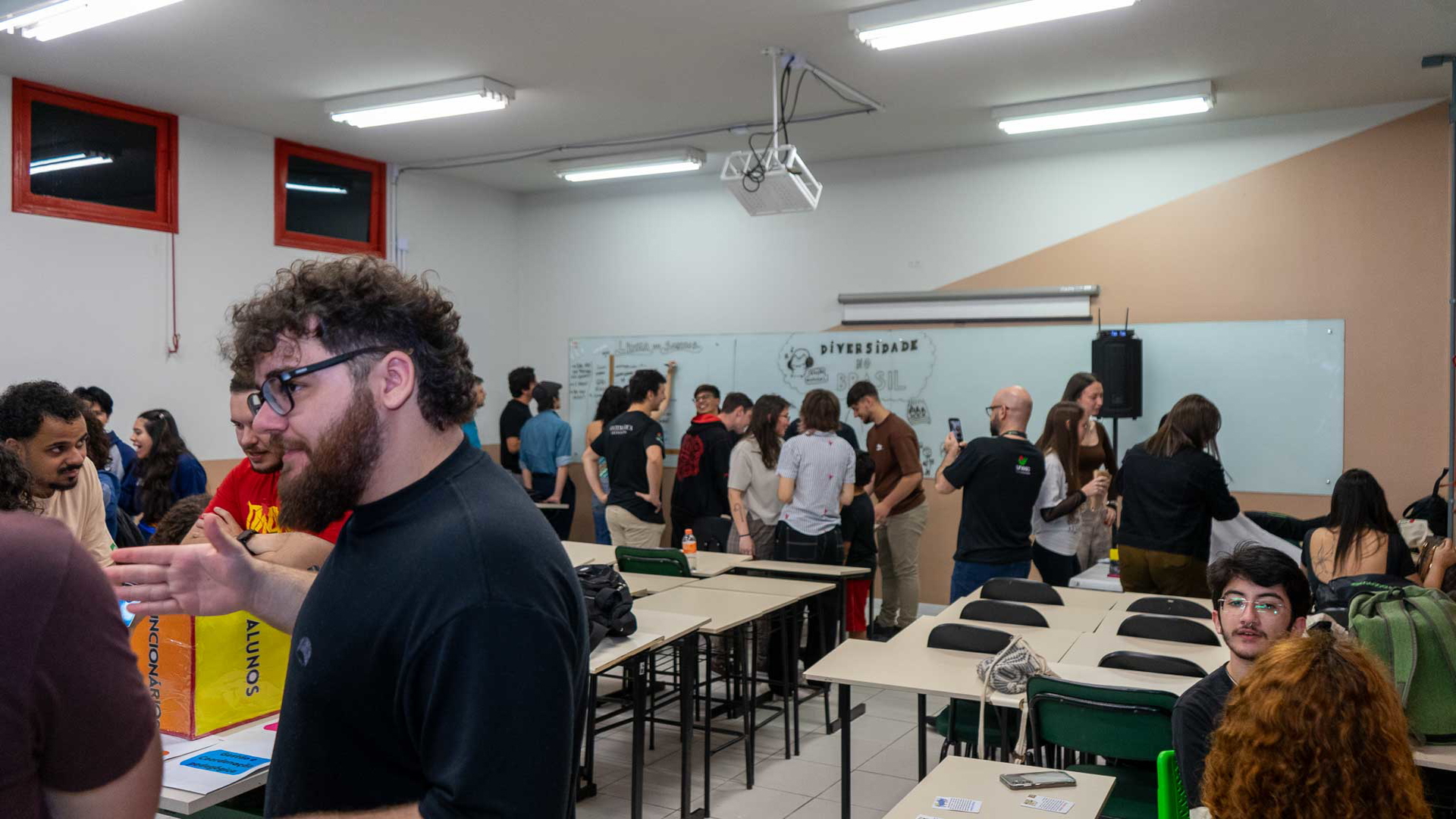
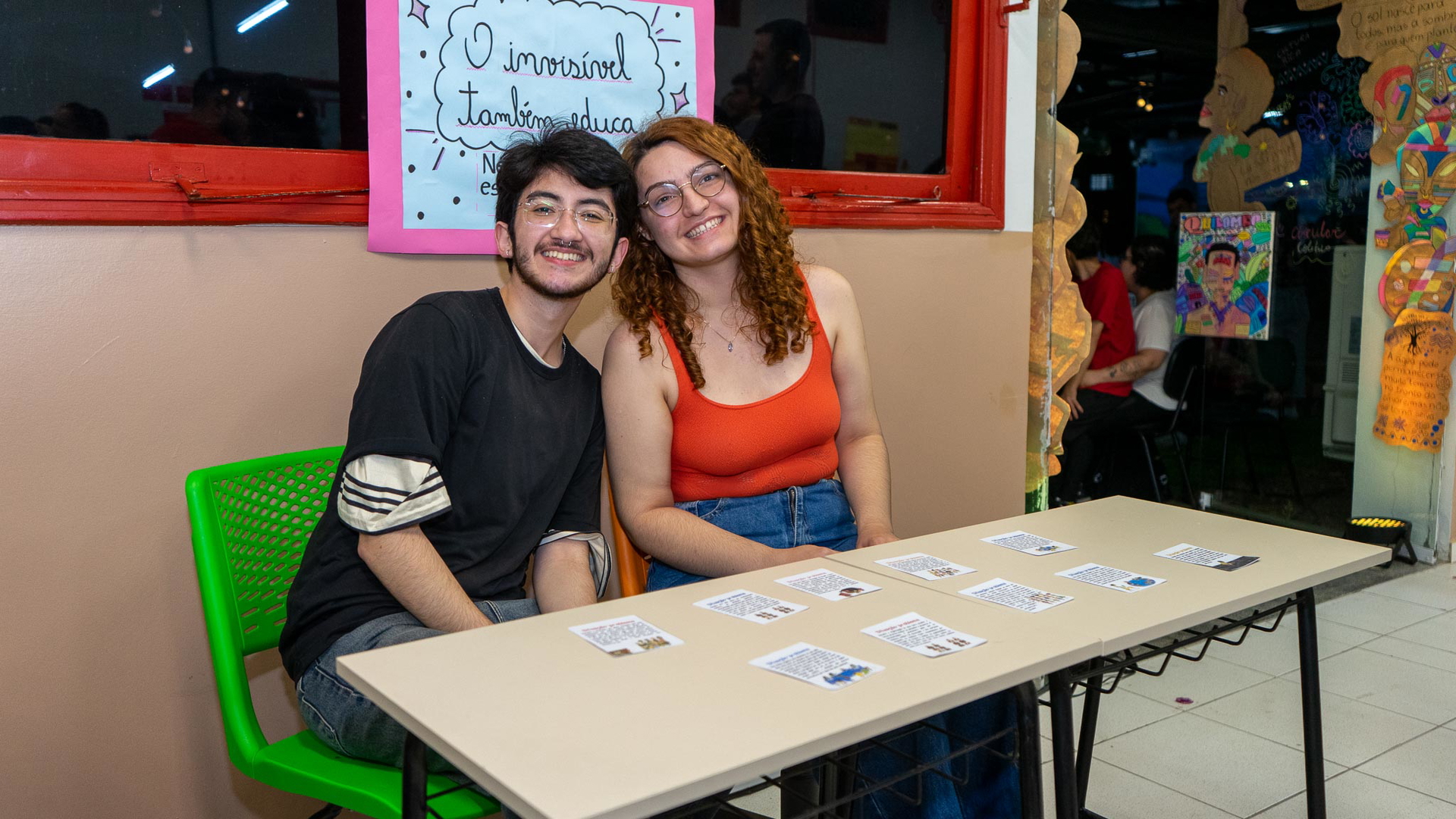
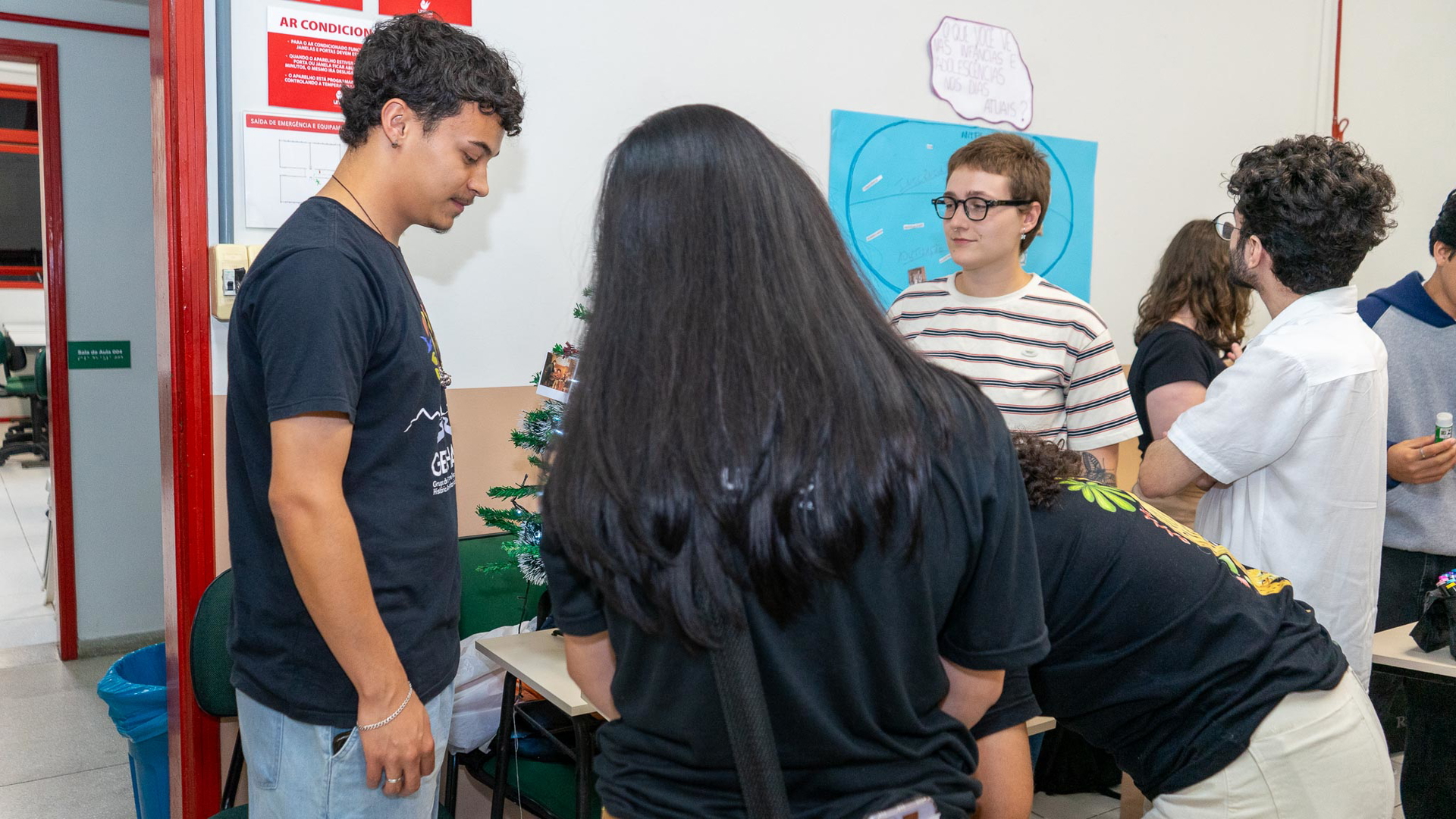
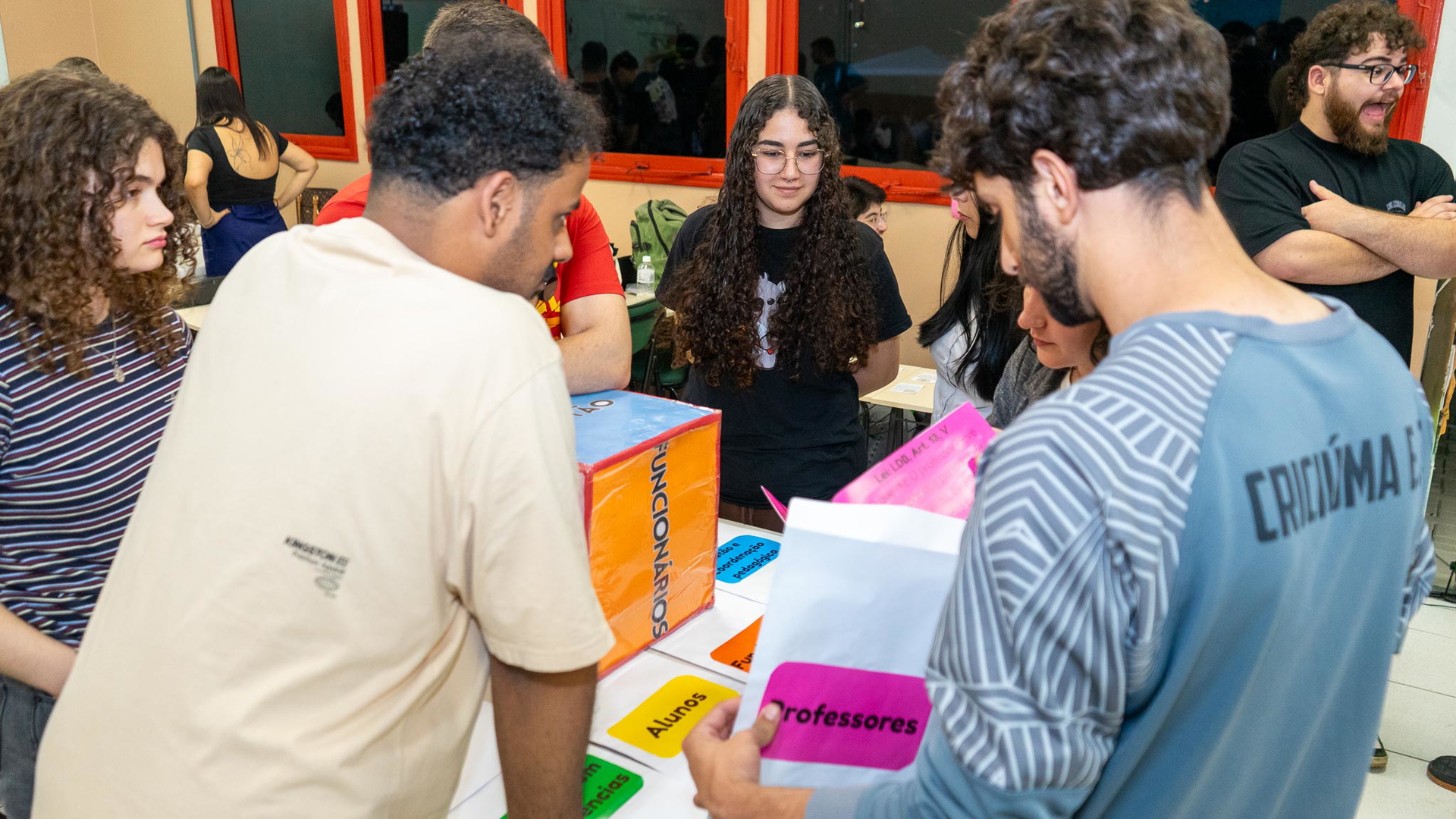
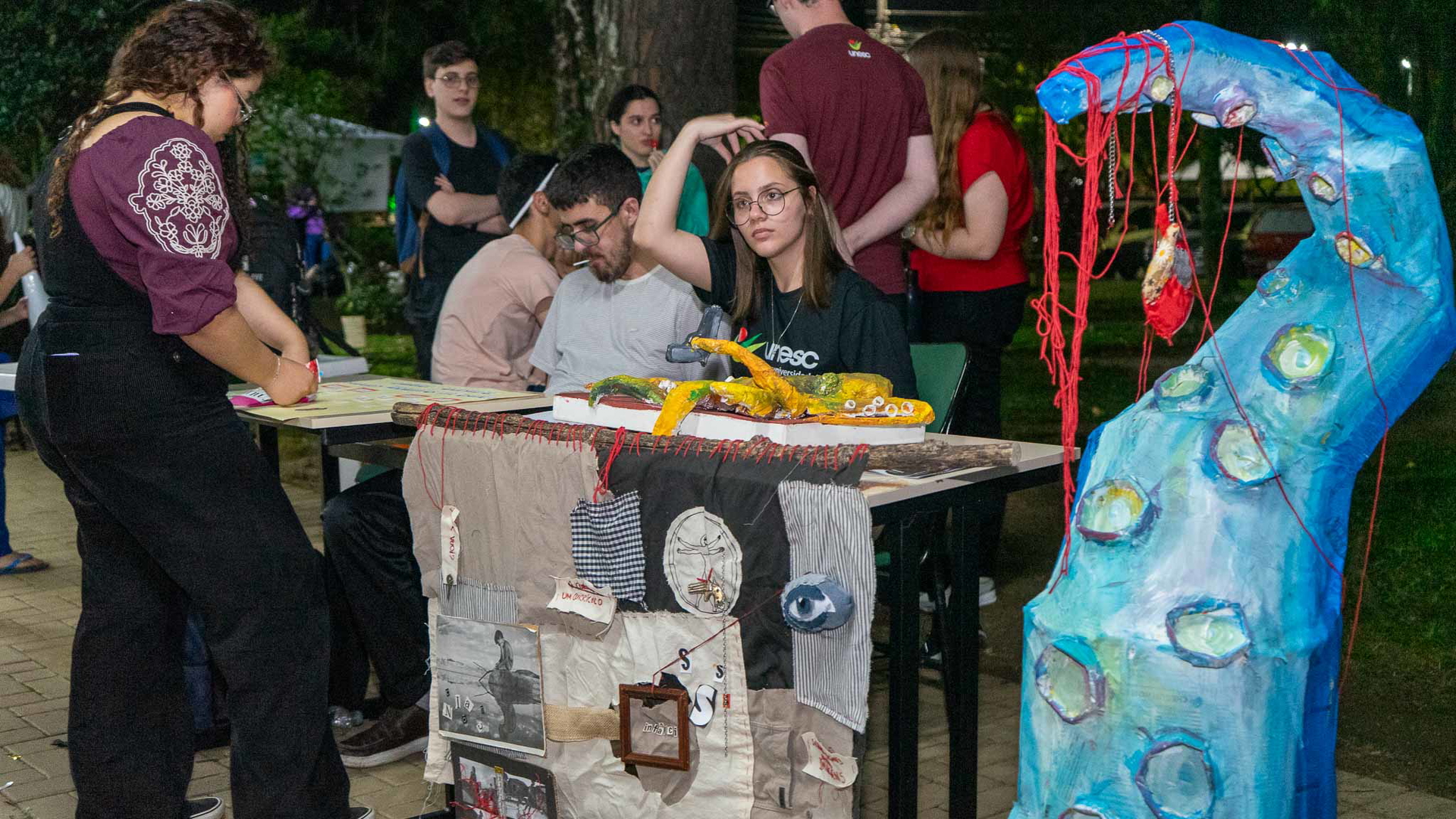
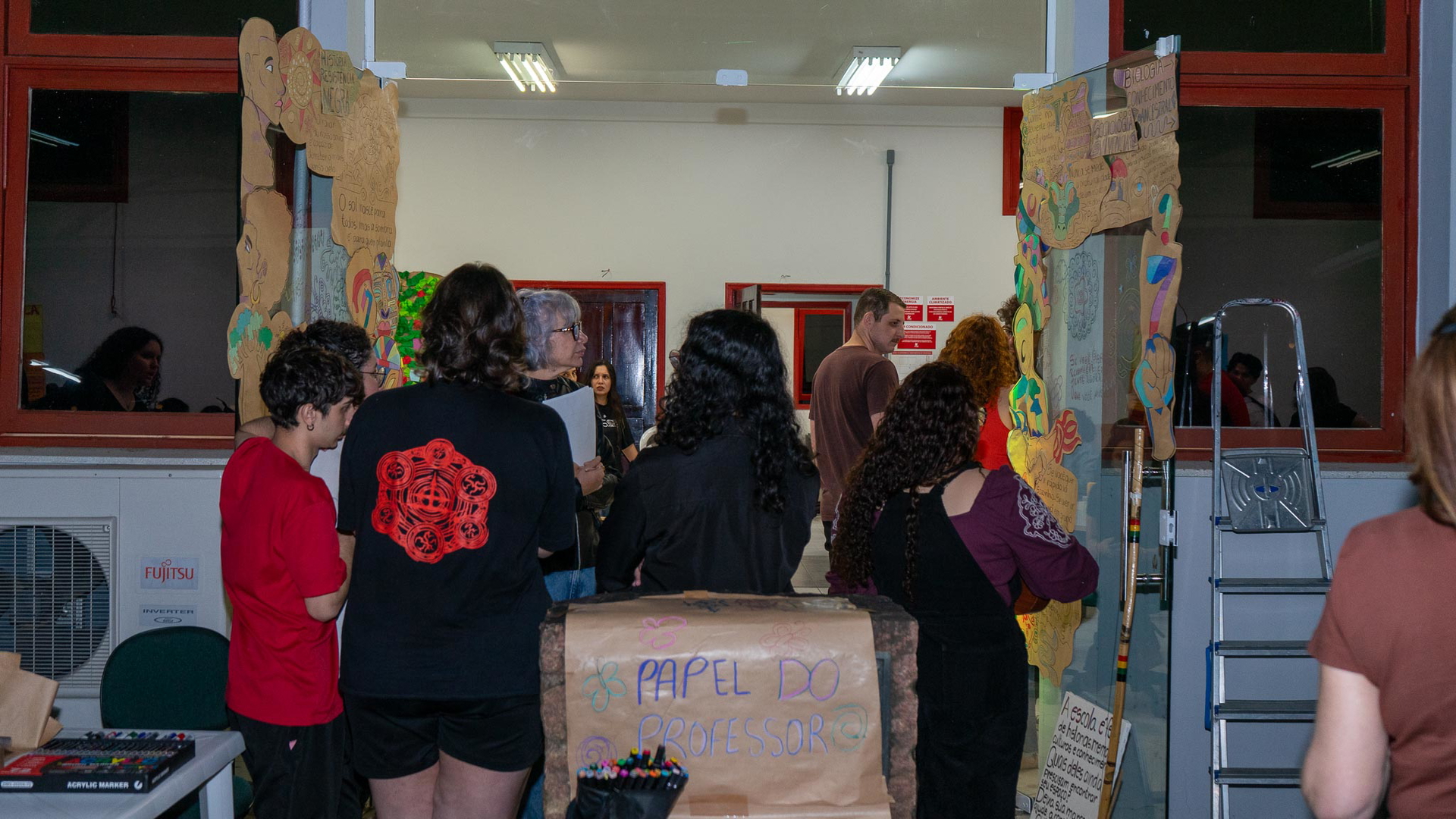
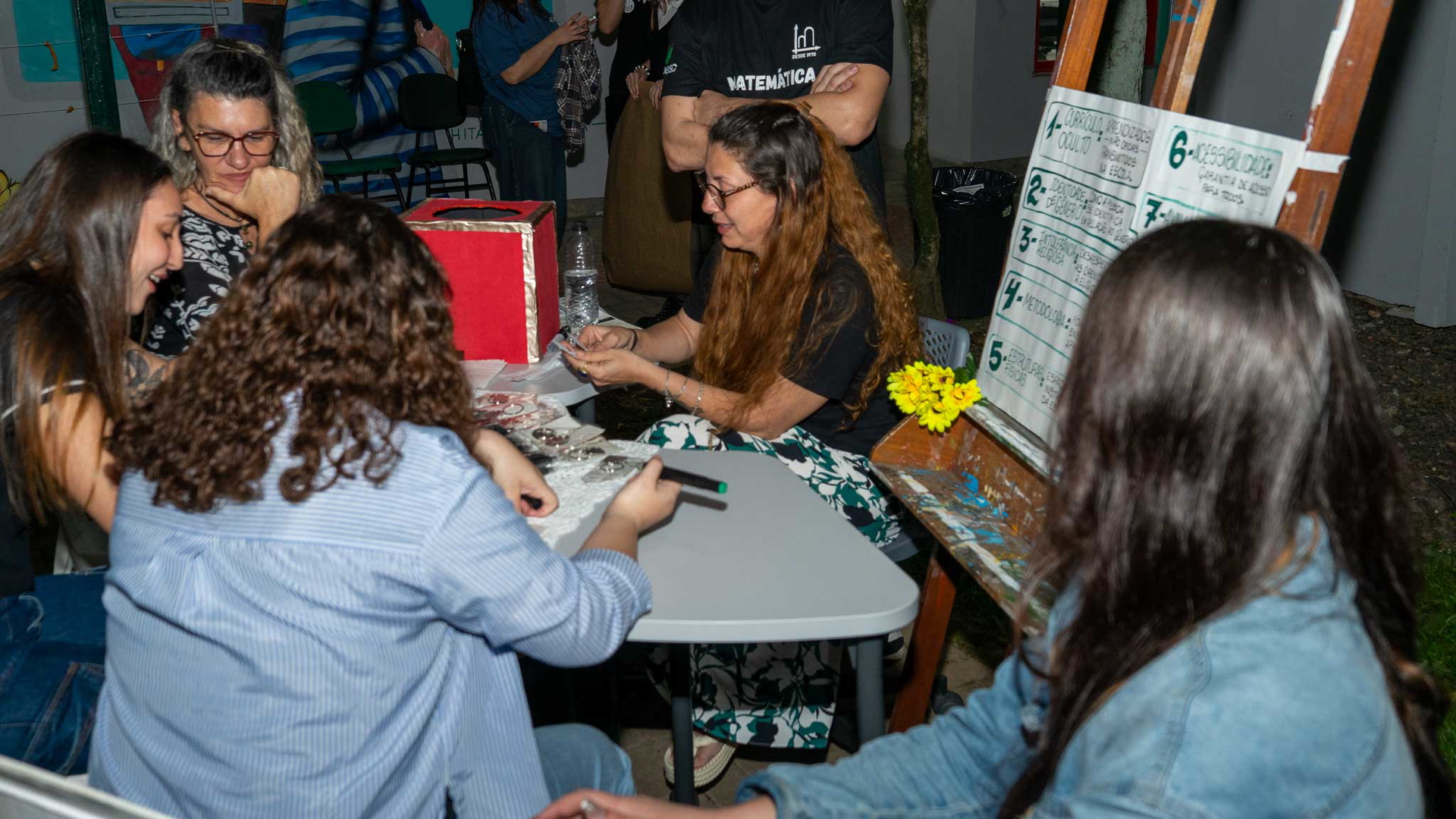
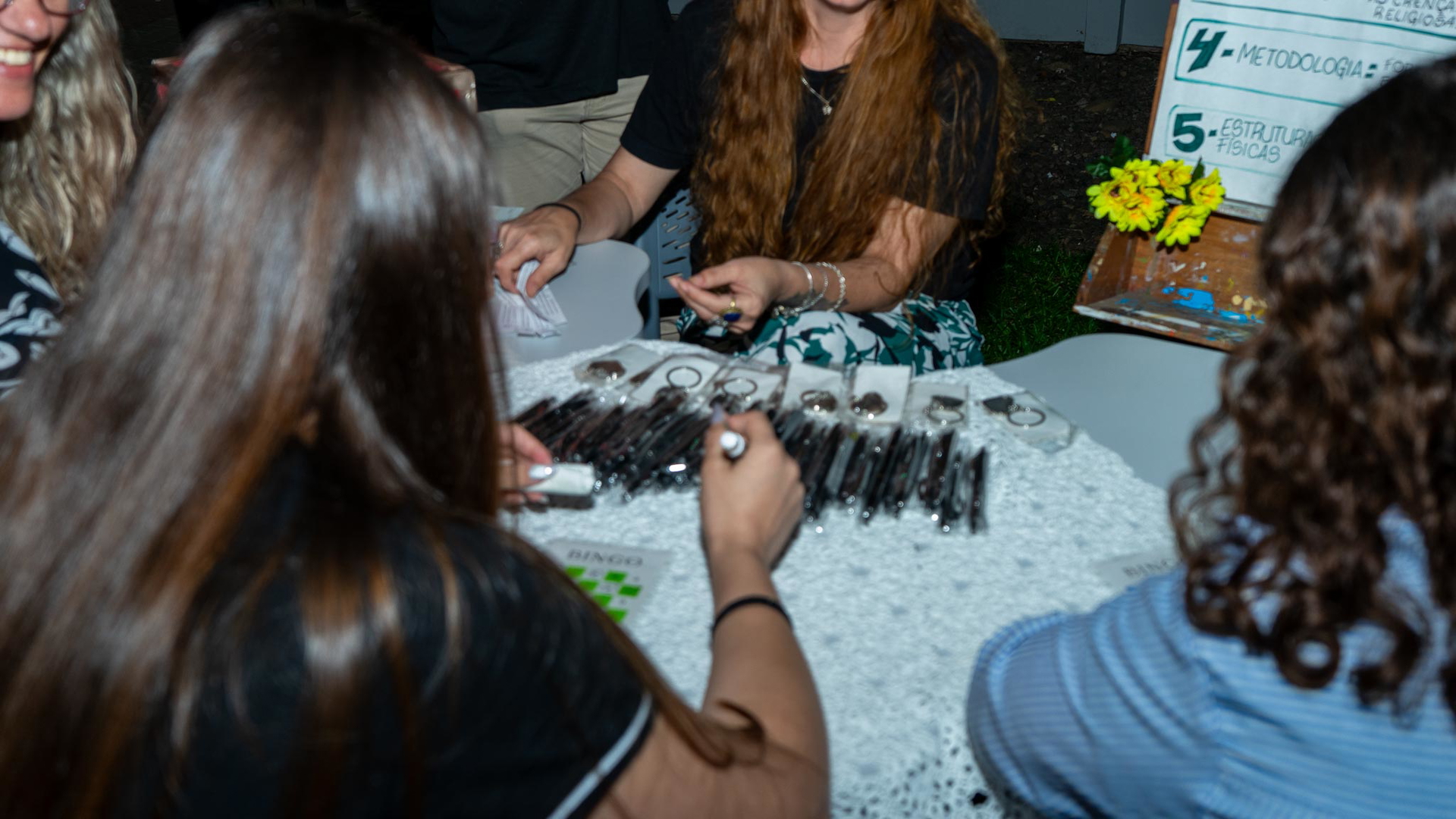
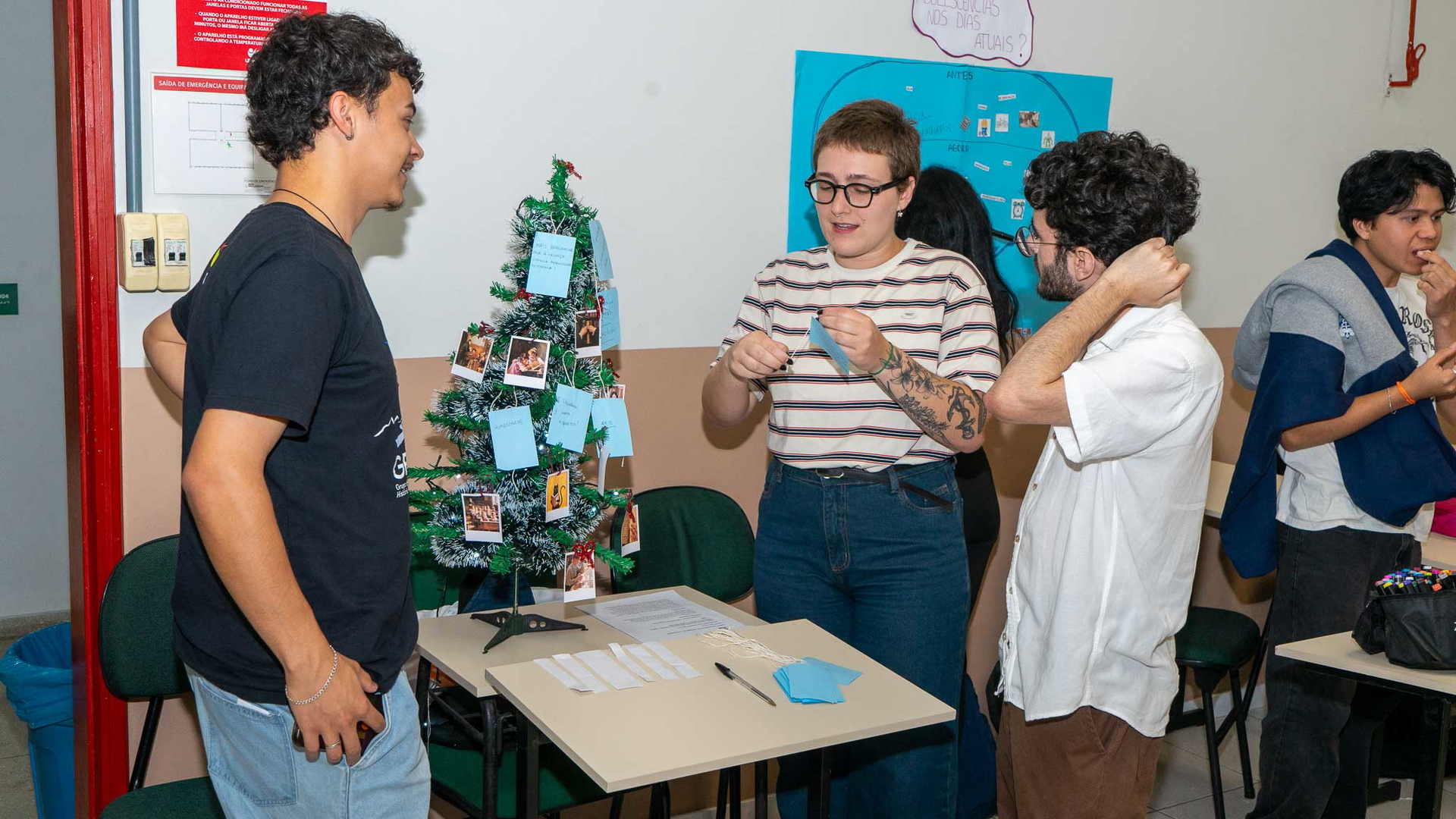
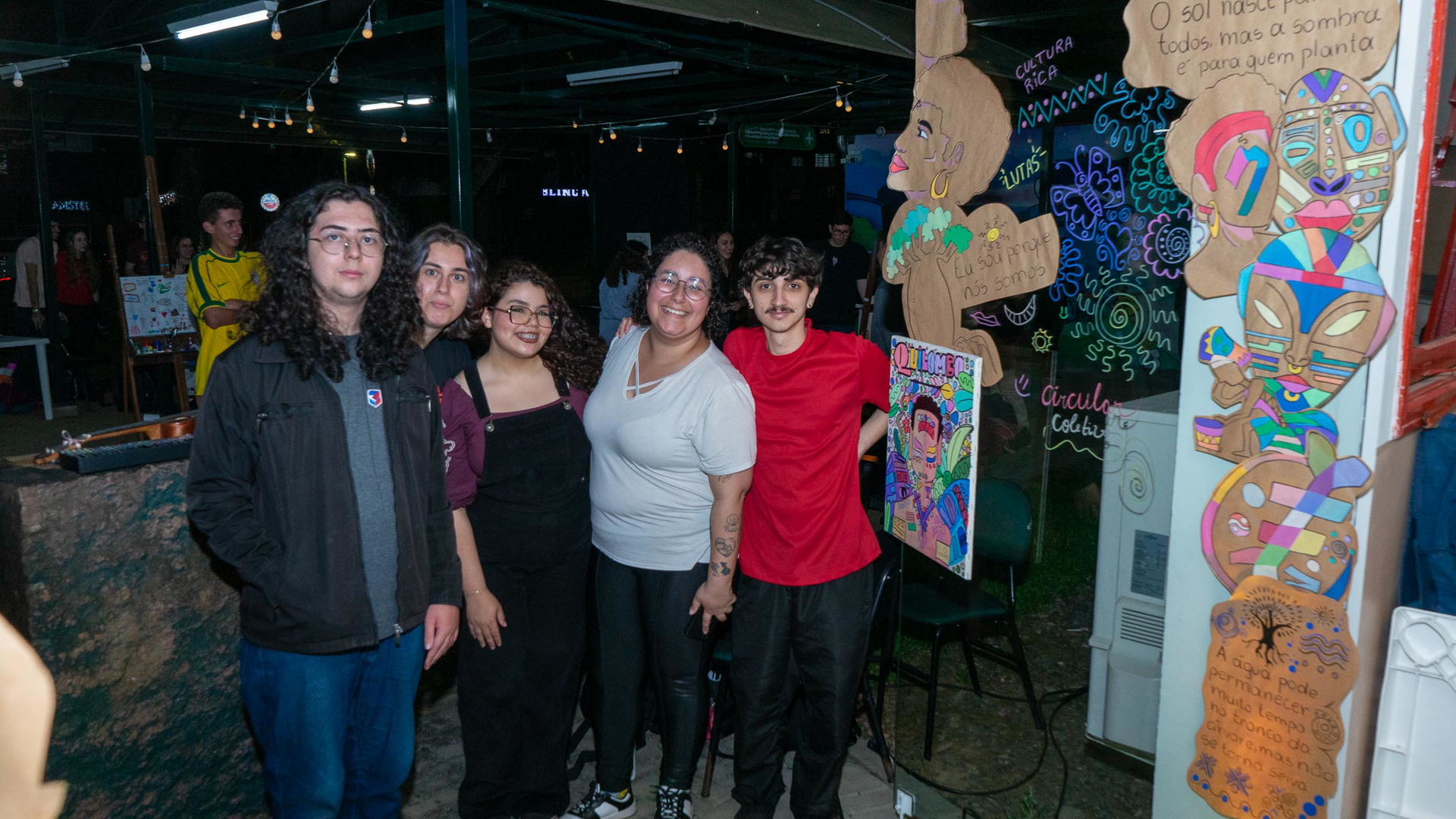
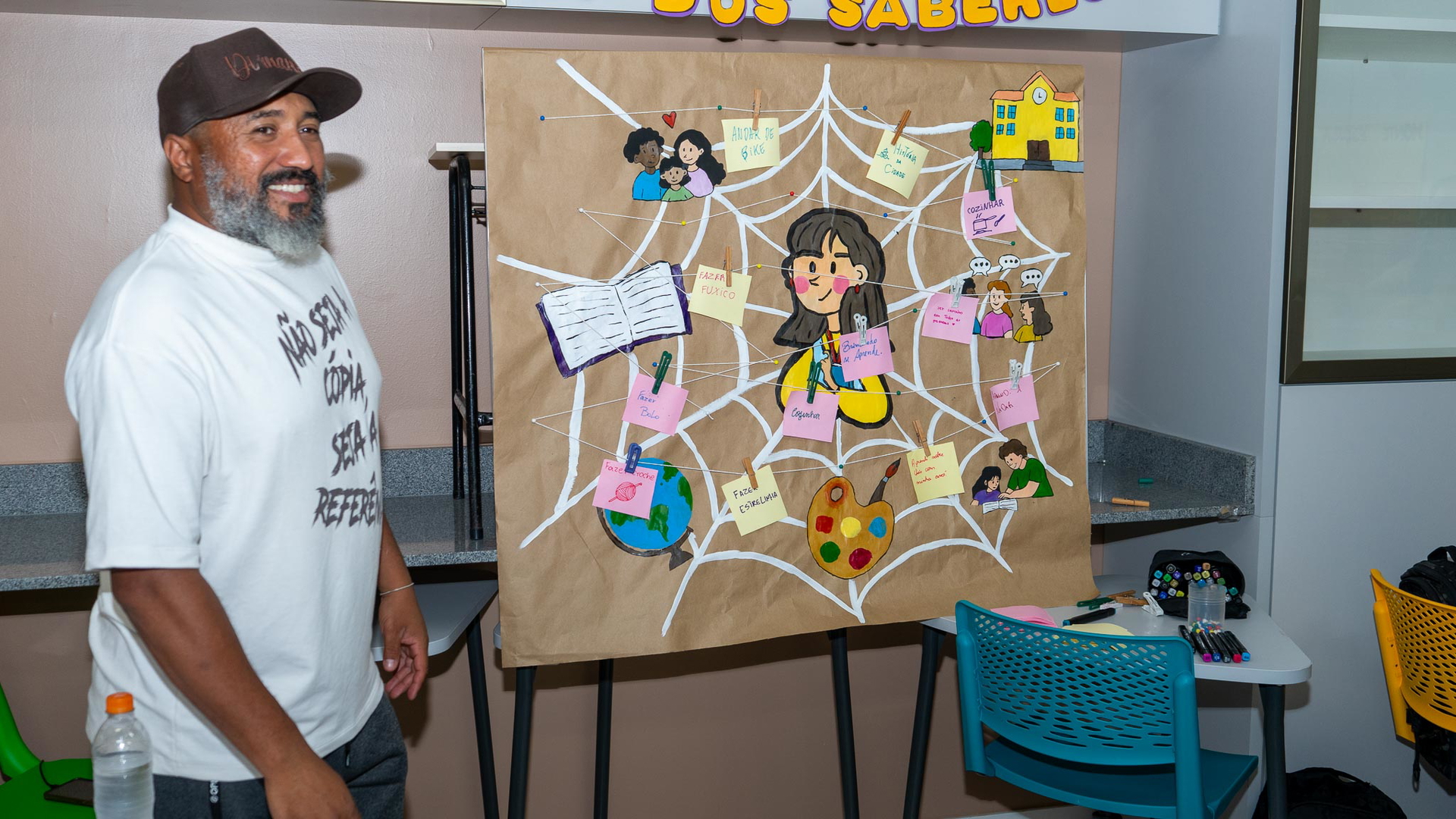
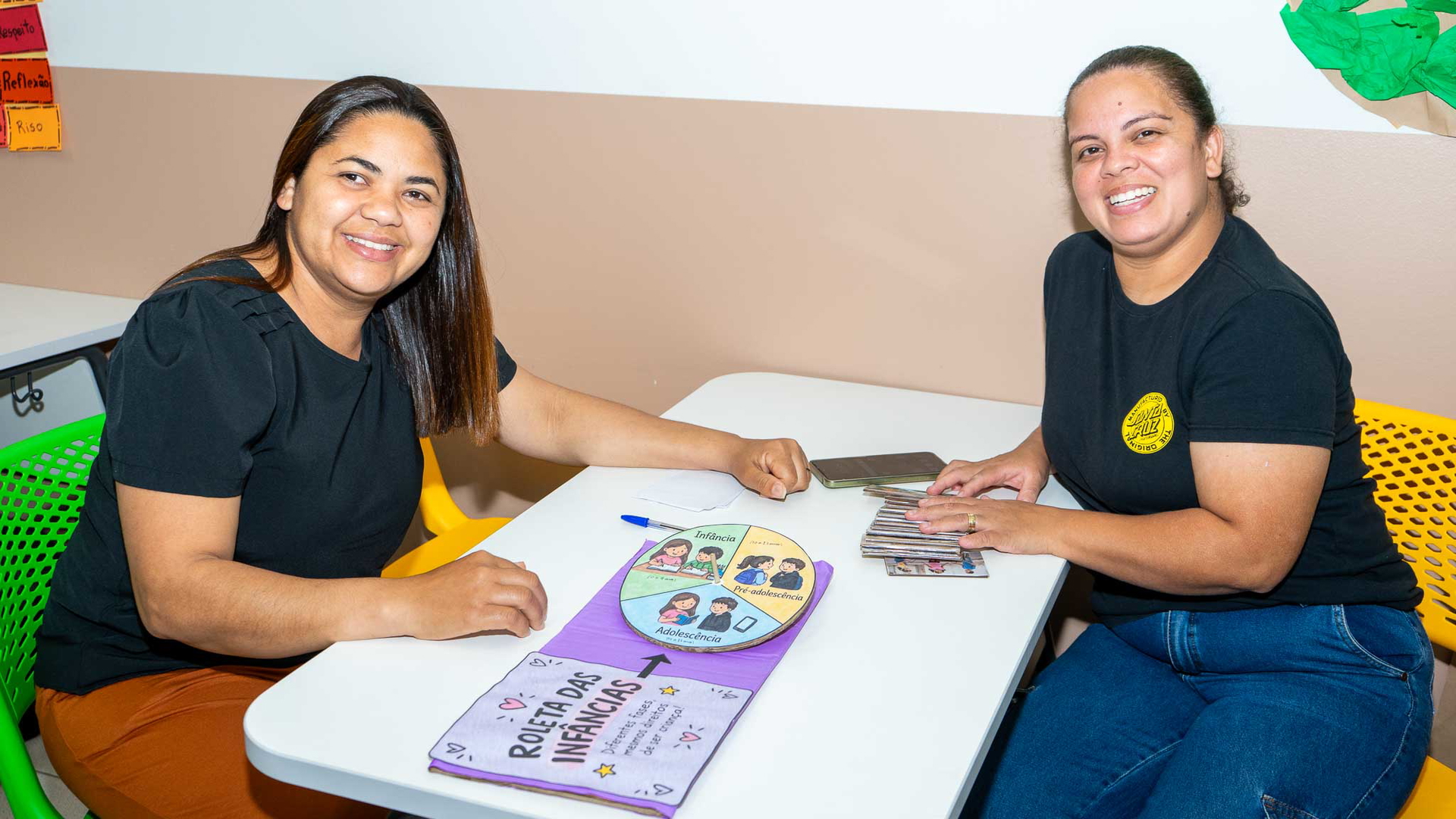
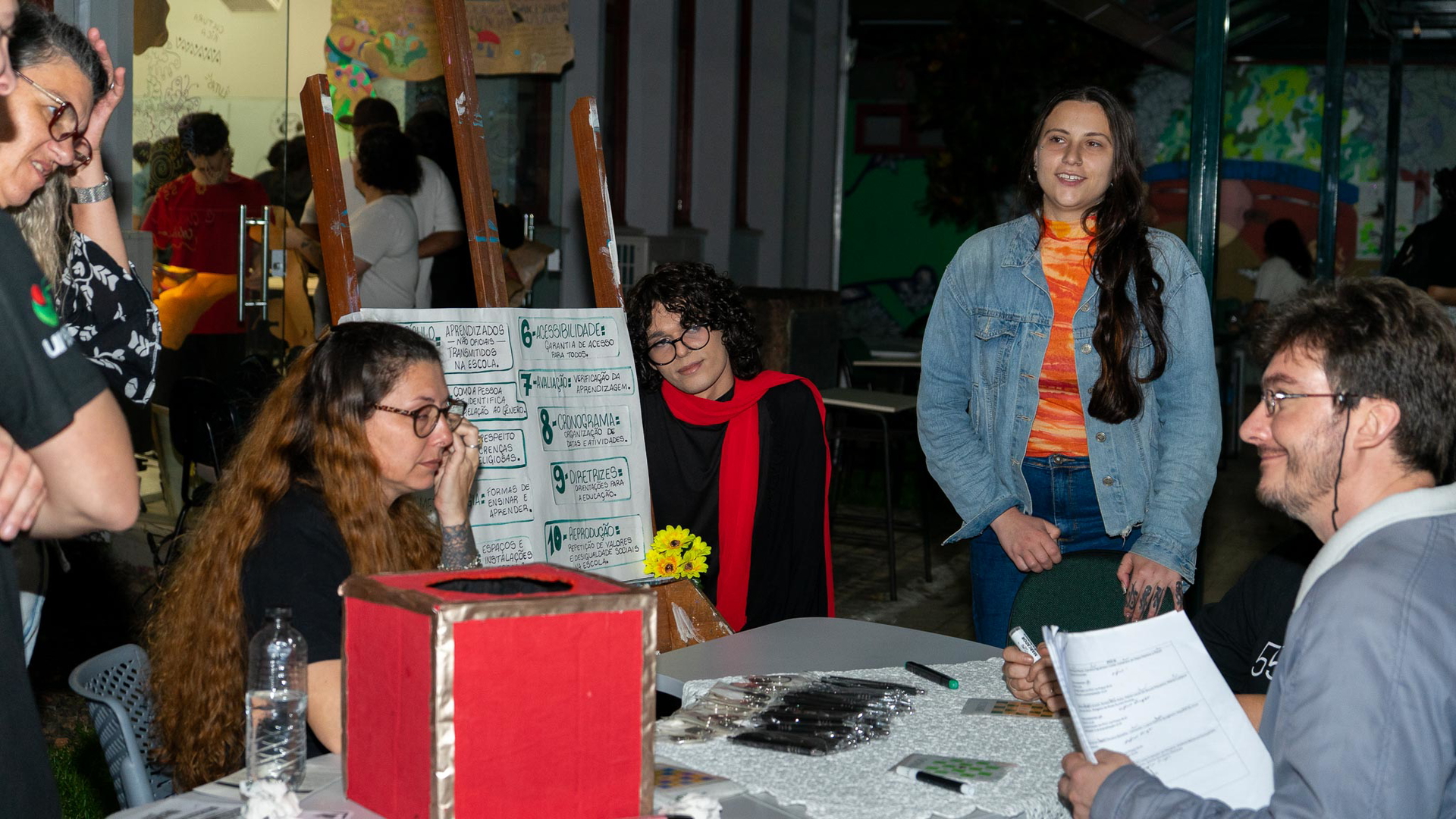
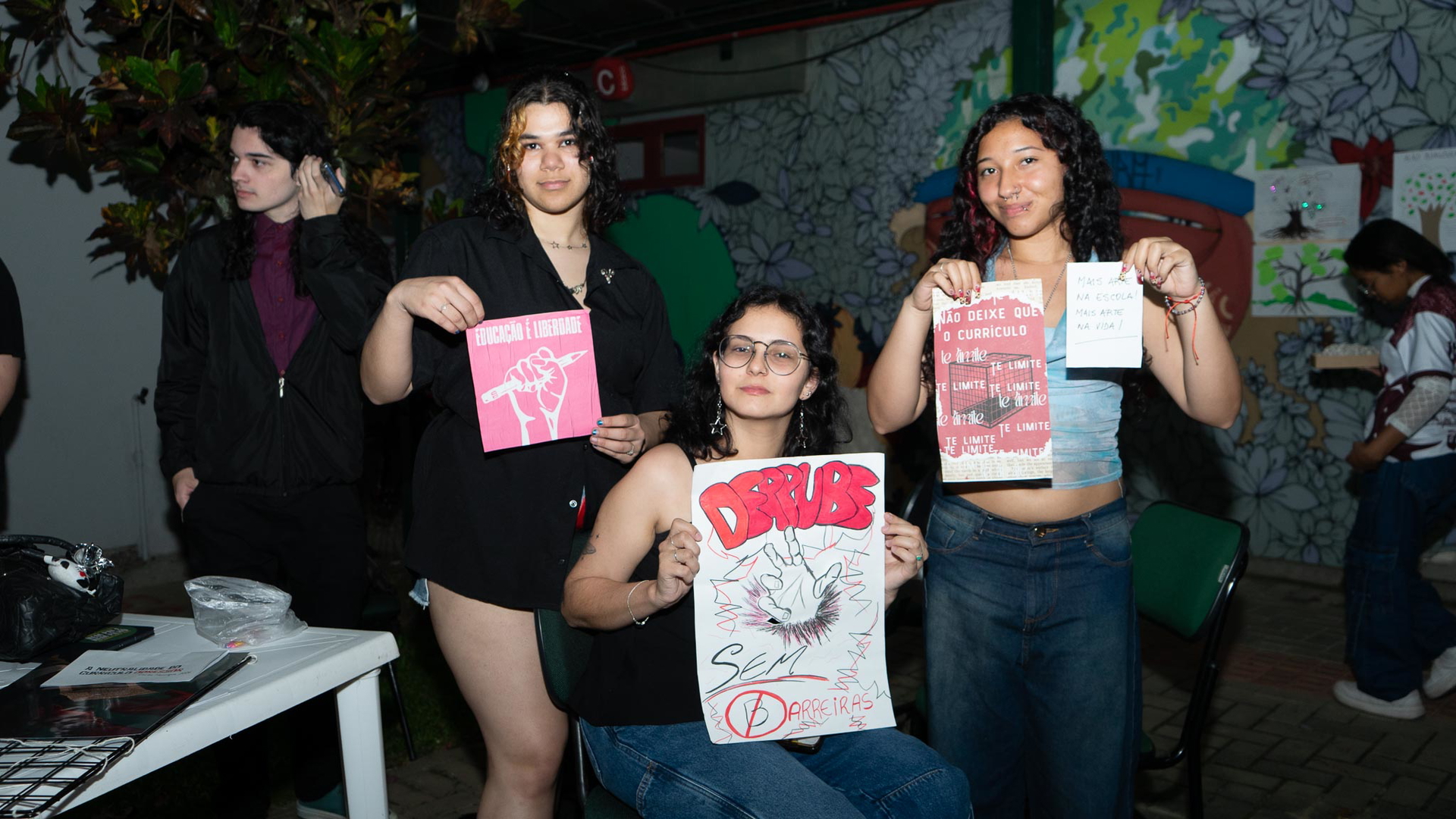
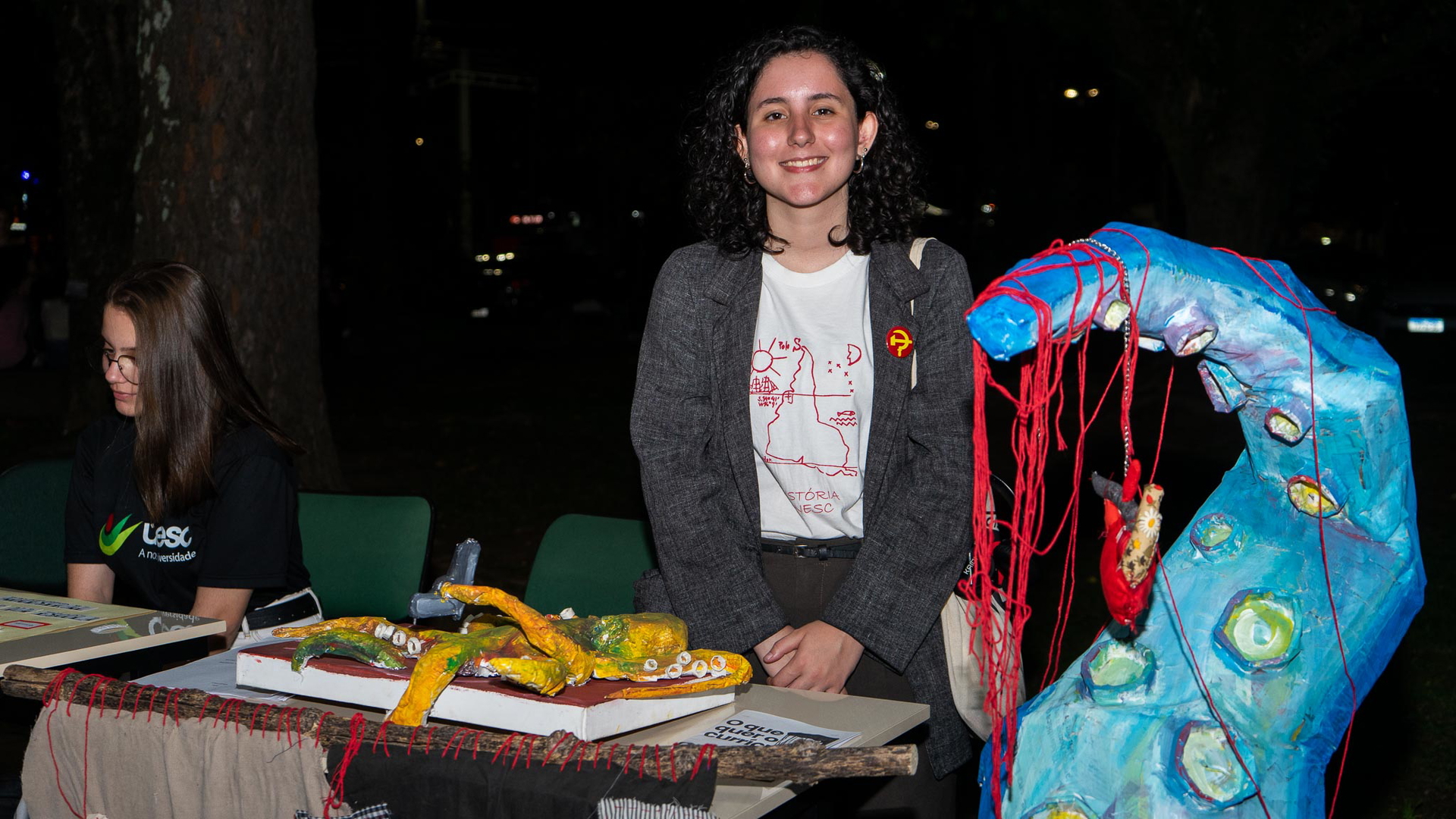
Colors, creativity, interaction, and different perspectives on education marked the evening of Thursday (November 5th) at Unesc's Bloquinhos. The space hosted the final edition of PCC na Praça, an event where students from the Integrated Licensure programs presented projects developed in the Practical Component Curriculum (PCC) course, sharing experiences and knowledge built throughout the semester with the academic community.
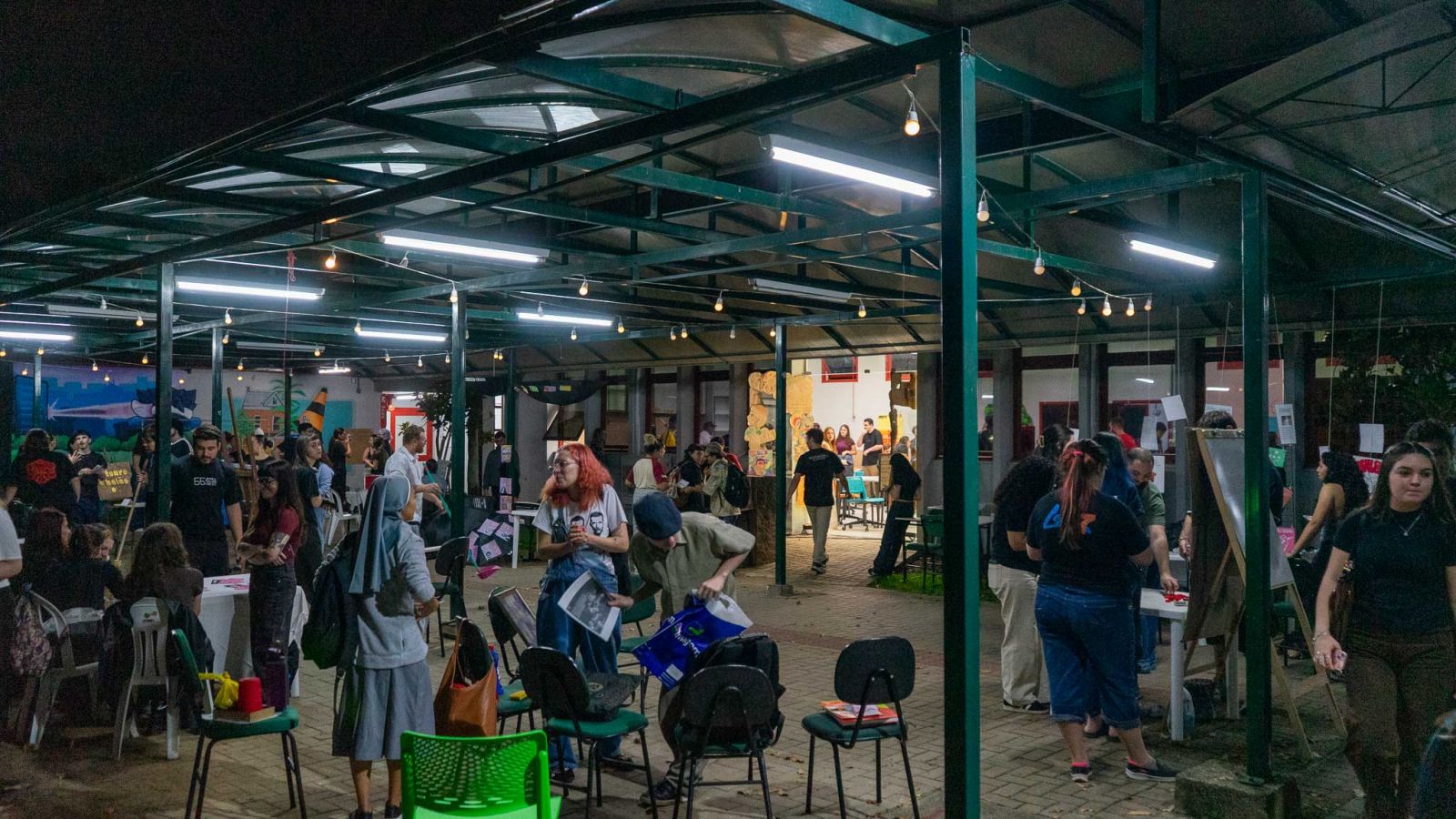 Open to the public, the exhibition brought together works on various themes, inviting visitors to learn, reflect, participate, and even experiment with new ways of understanding the school environment. The proposal was to transform the studied content into practical activities, demonstrating how teacher training also occurs through creativity, research, and contact with people.
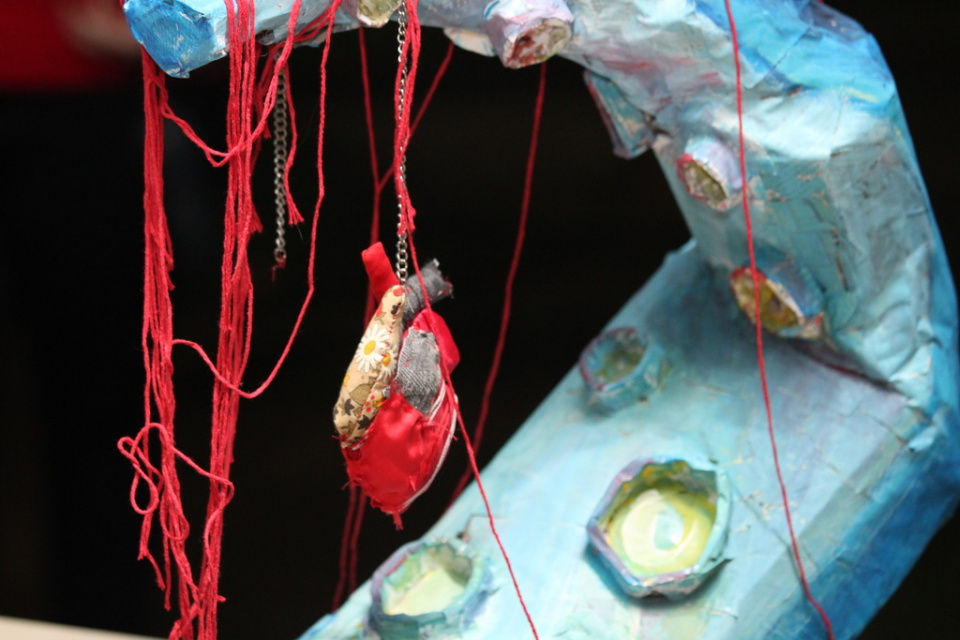
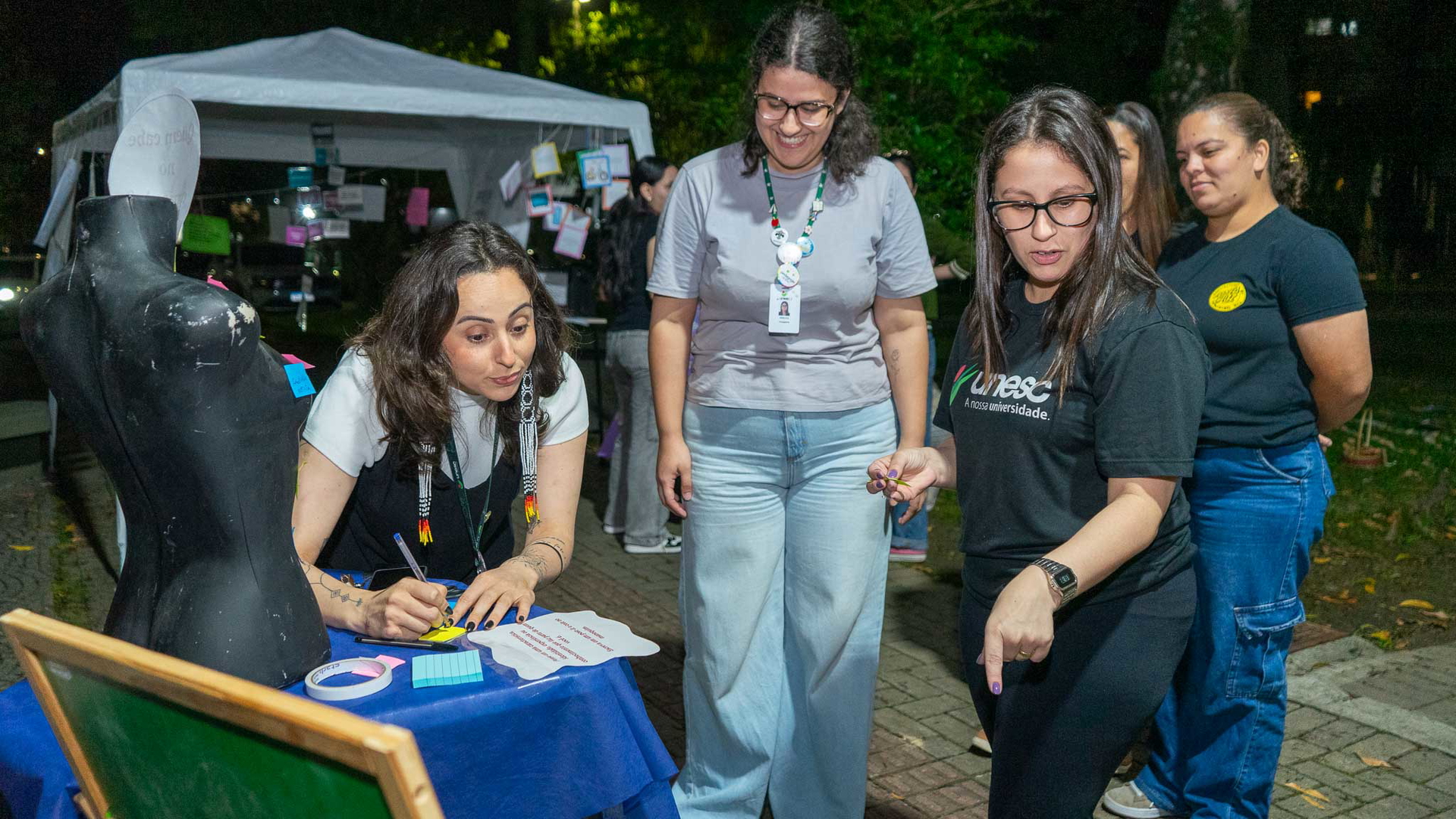
Among the presented works was "School Anatomy," which established a relationship between the functioning of the human body and the organization of a school. Based on the drawing of a human torso, the students related organs and structures of the body to the different parts that make up the school environment. "The idea was to show that, just as the body needs the integrated functioning of its organs, the school depends on the articulation of different sectors and people to fulfill its role," said Visual Arts student Helton de Mello Novelletto.
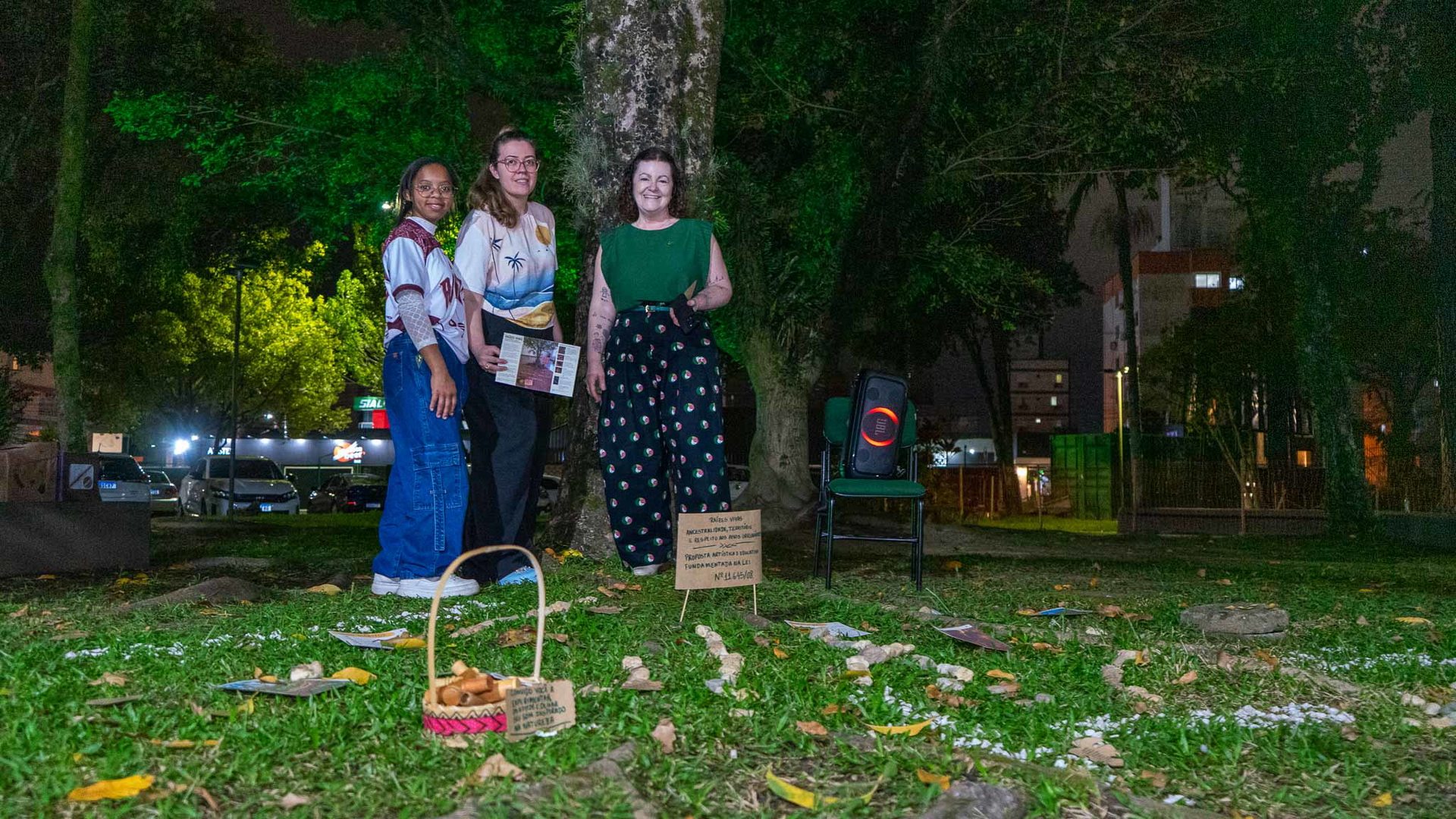
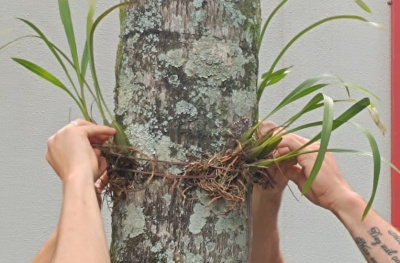
Another proposal brought to the debate indigenous knowledge and ancestry in the school curriculum. Maria Eduarda Ceron, a fourth-semester Biology – Licensure student, explains that the group sought to broaden the perspective on the knowledge that is part of Brazilian cultural formation. 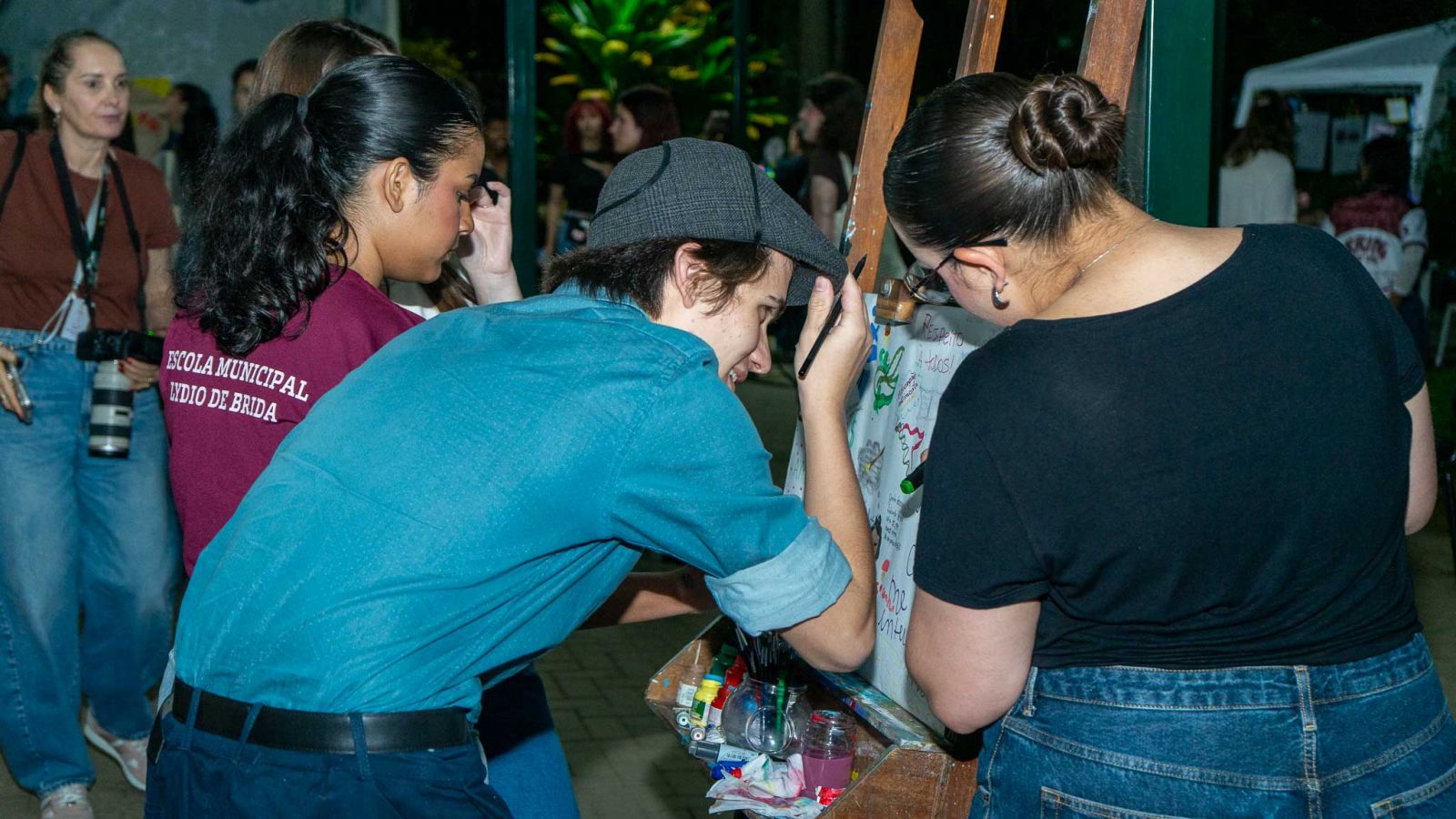
"We brought in ancestry, especially from Brazilian indigenous roots, because we realized that this knowledge often gets sidelined. We talked about agriculture, environmental management, and medicinal plants, showing how many of the knowledge we use today originates from the ancestral knowledge of indigenous peoples," she explains.
For her, PCC na Praça serves as a meeting space between different areas. "I see it as a big interactive poetry slam because we connect with other courses and encounter a diversity of ideas. This exchange stimulates thinking, reflecting, and applying what we learn in the classroom," she emphasizes.
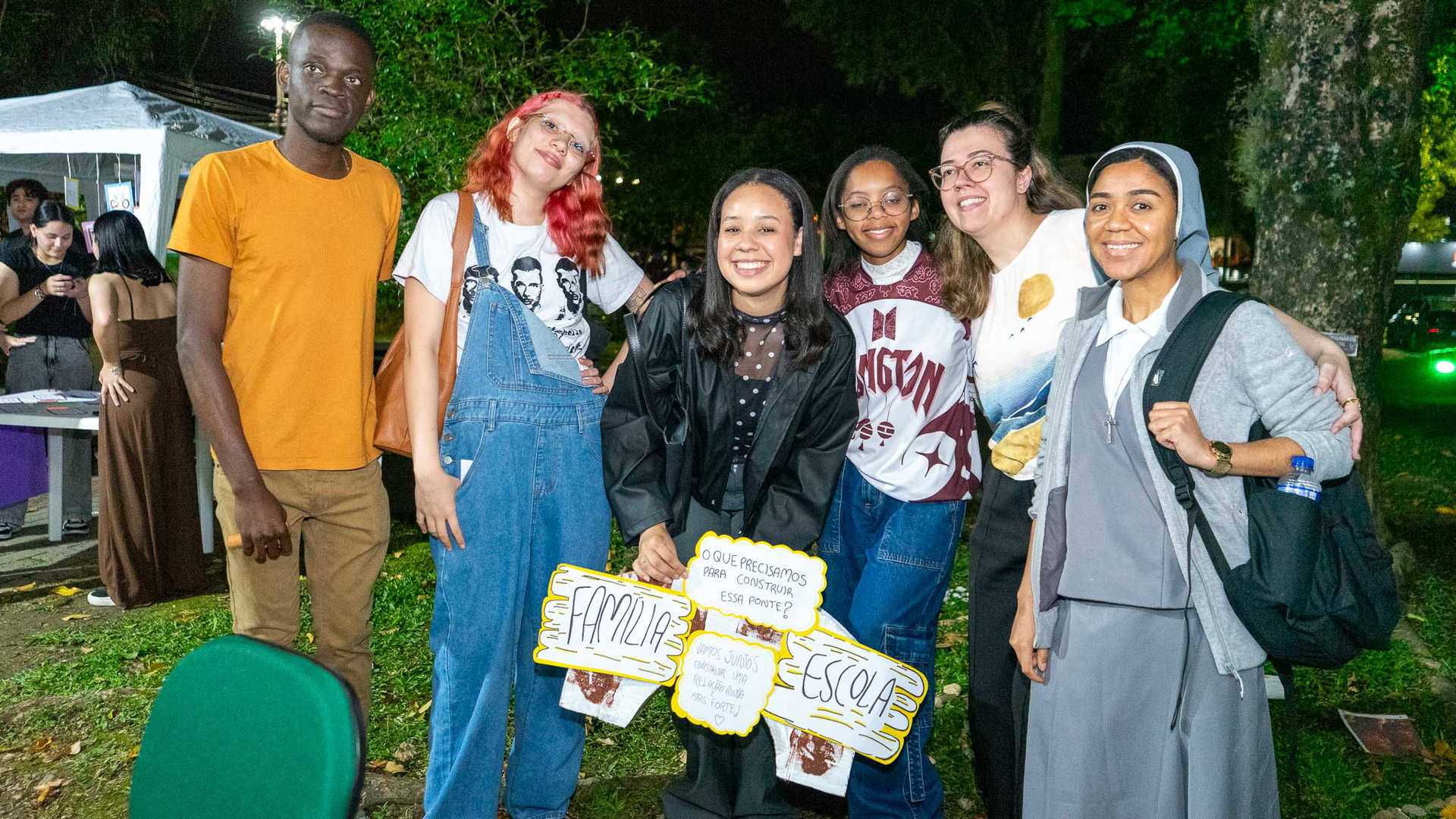
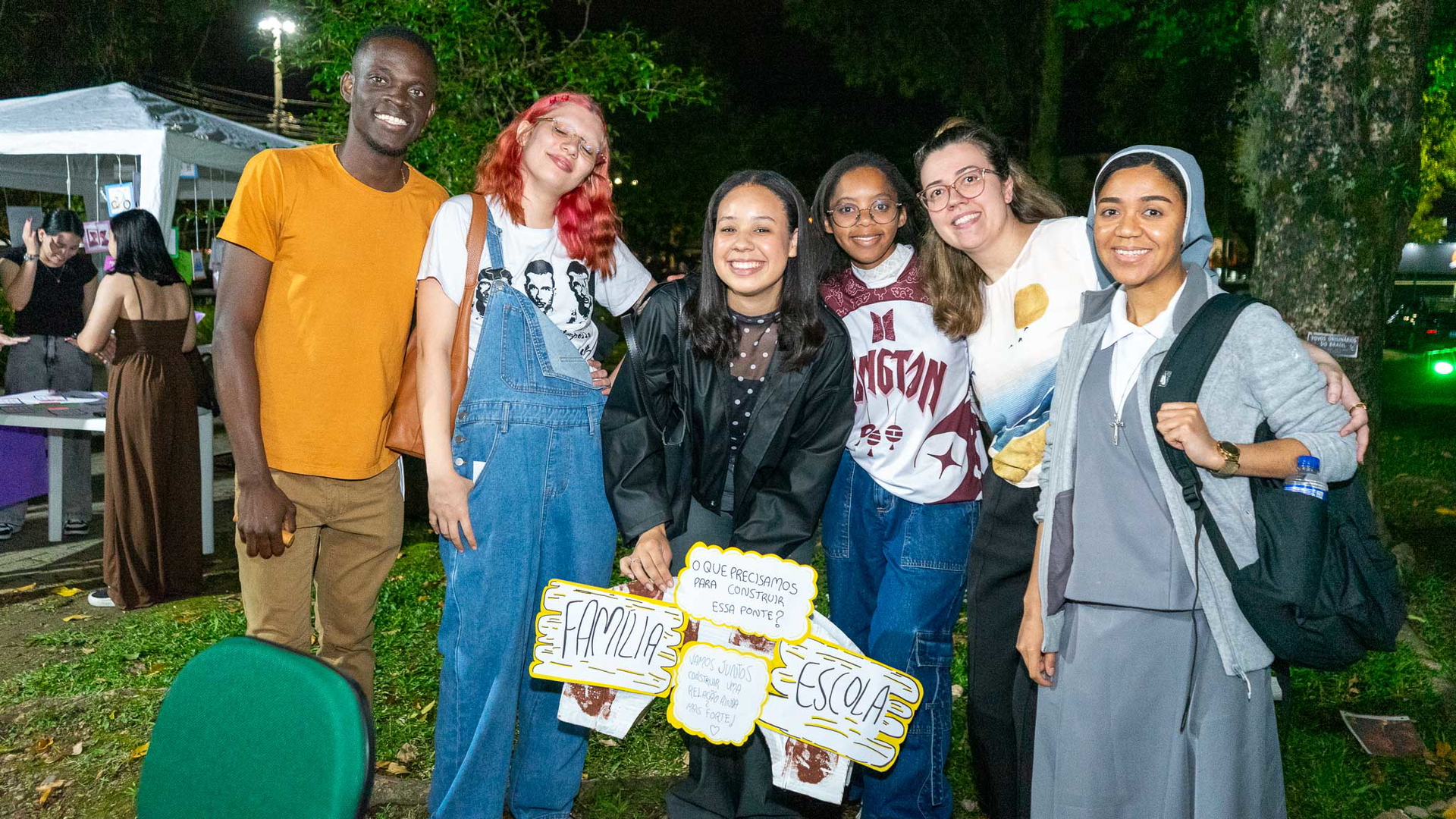
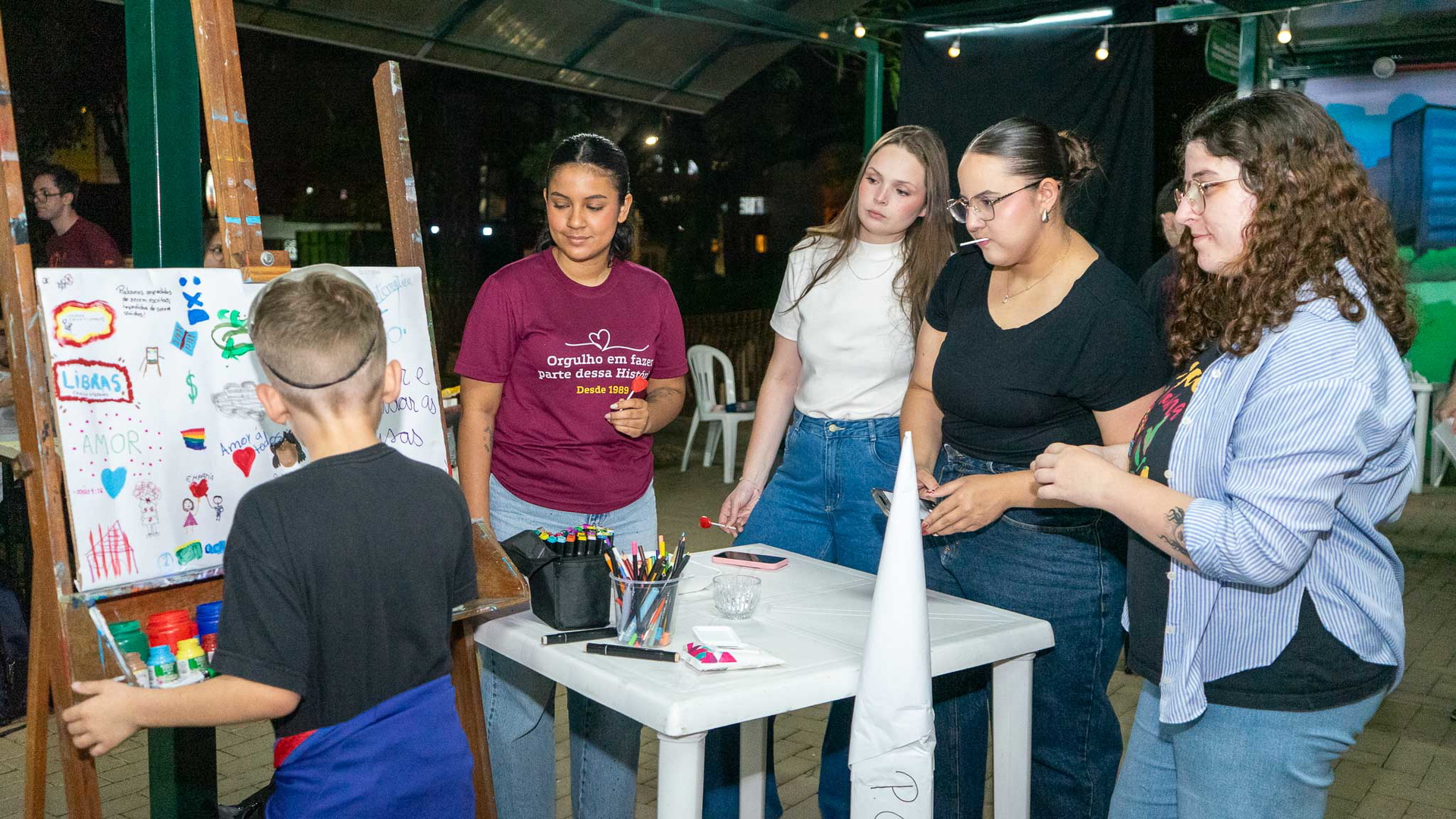
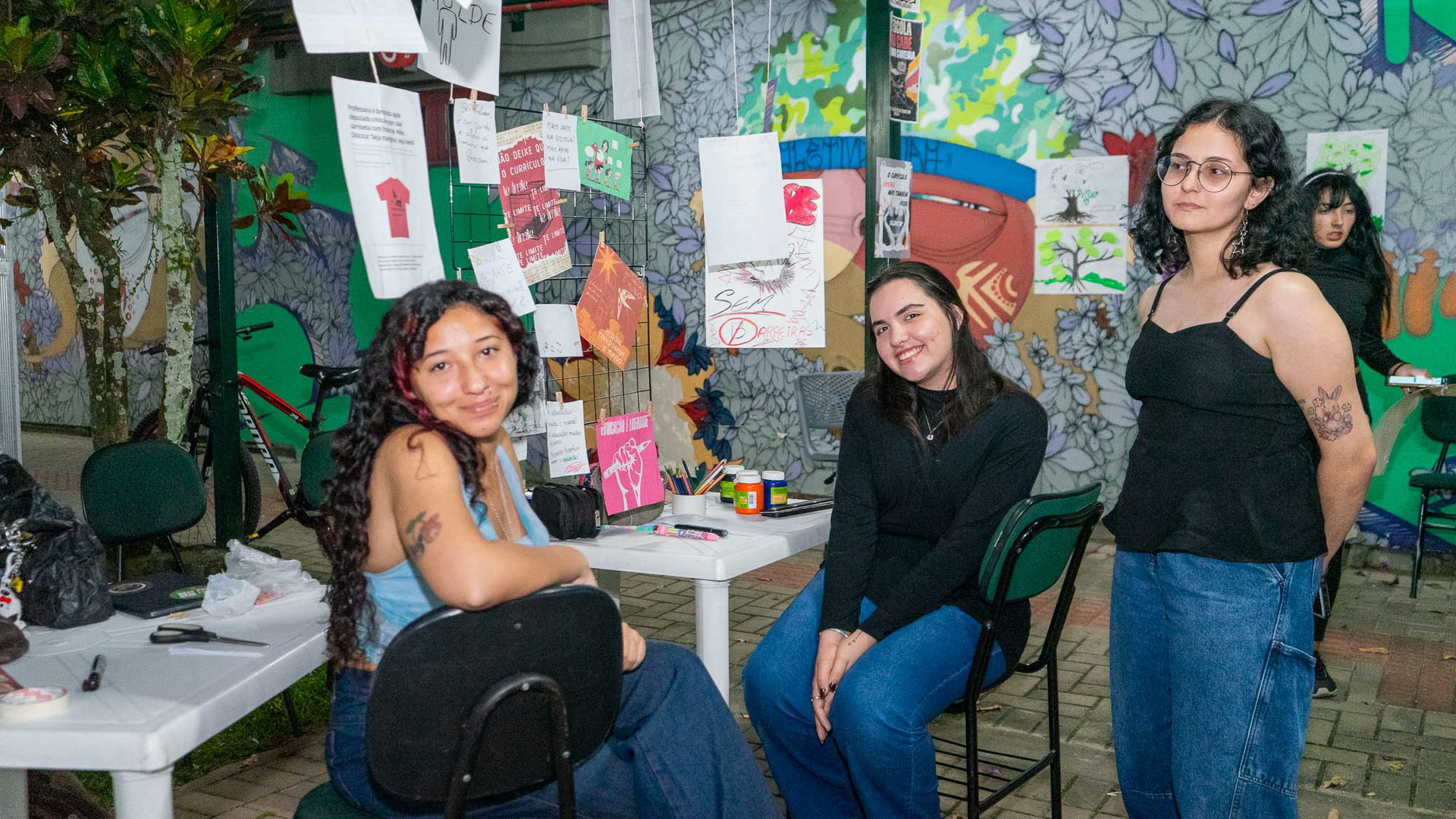
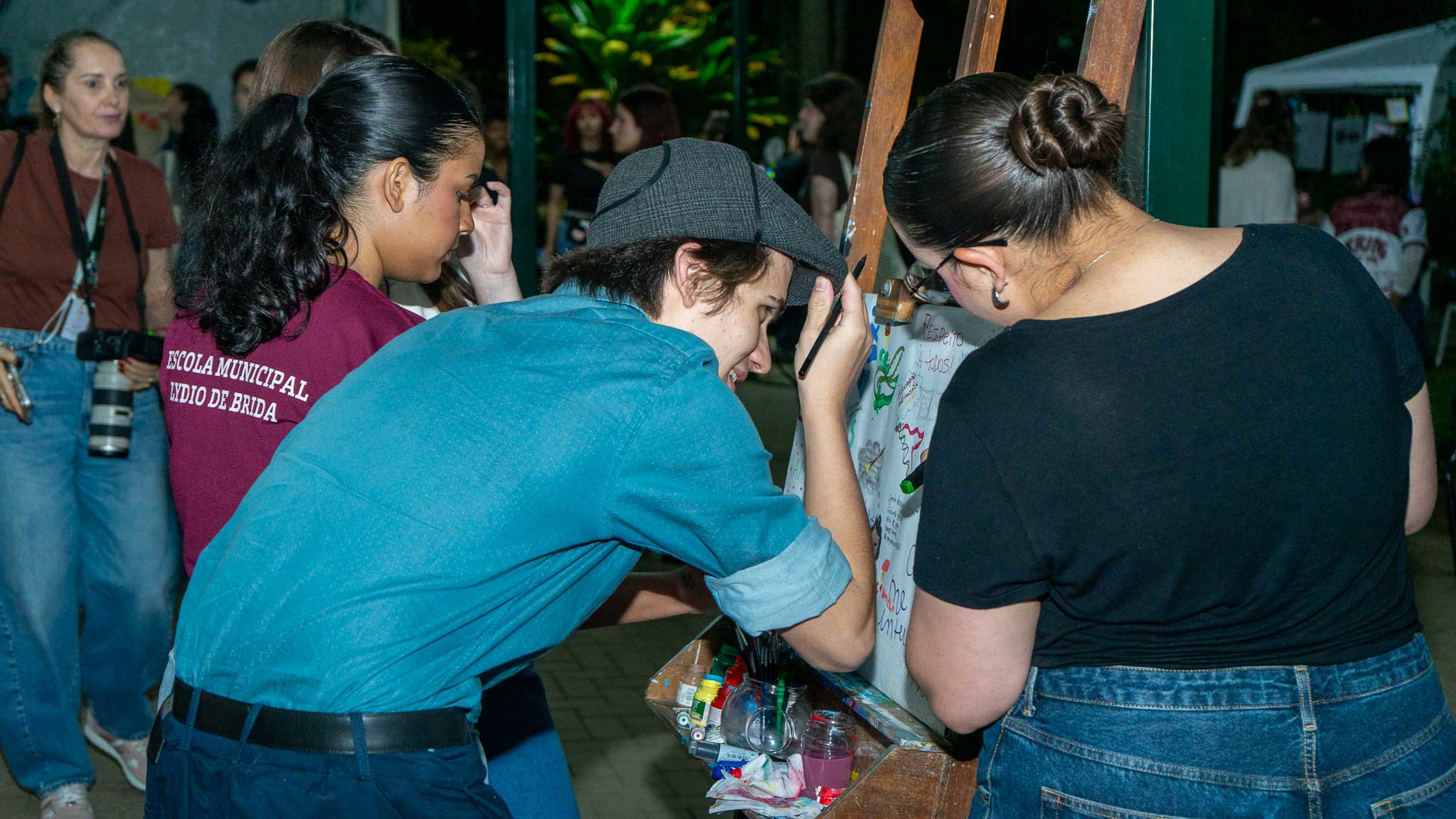
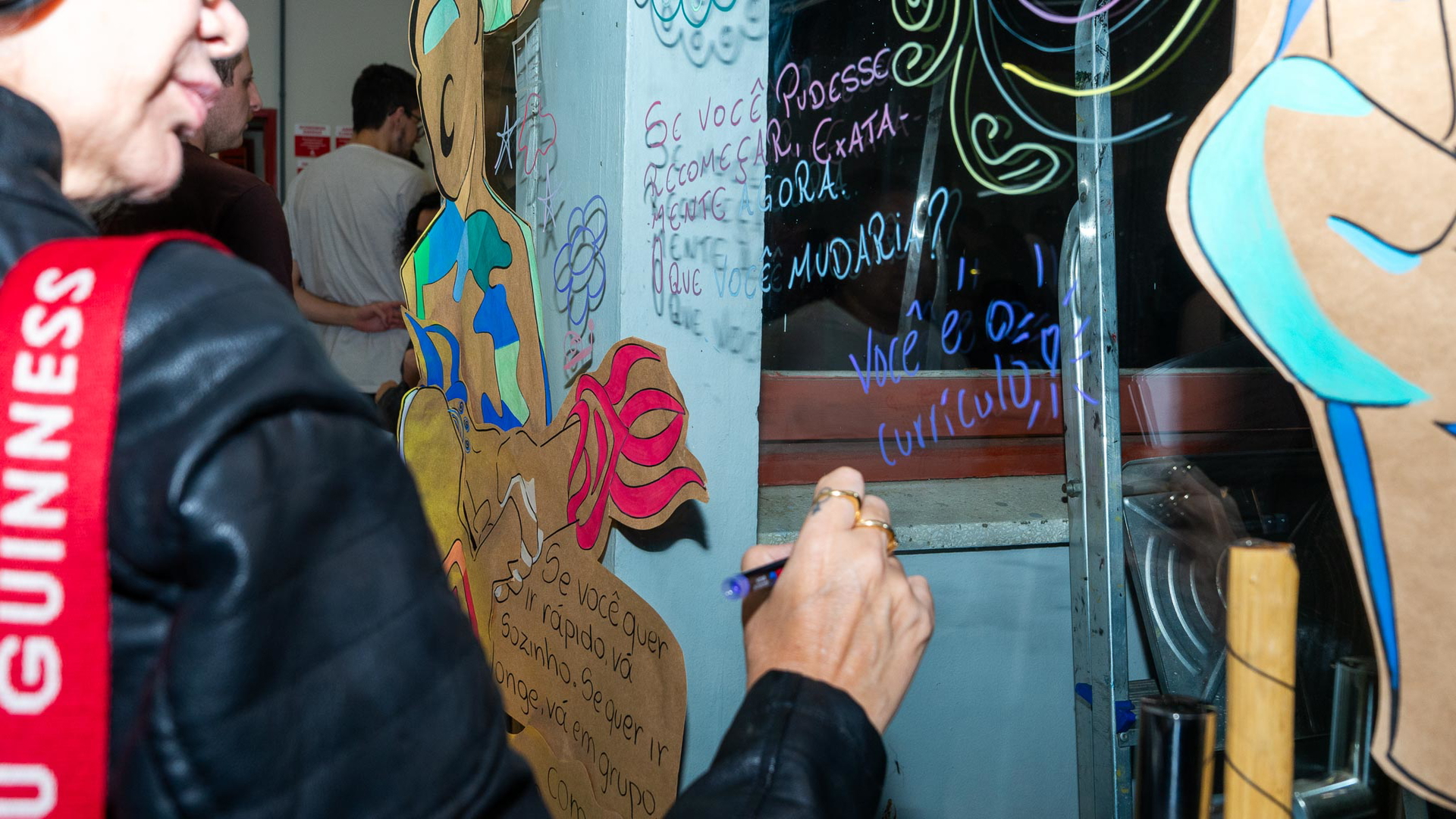
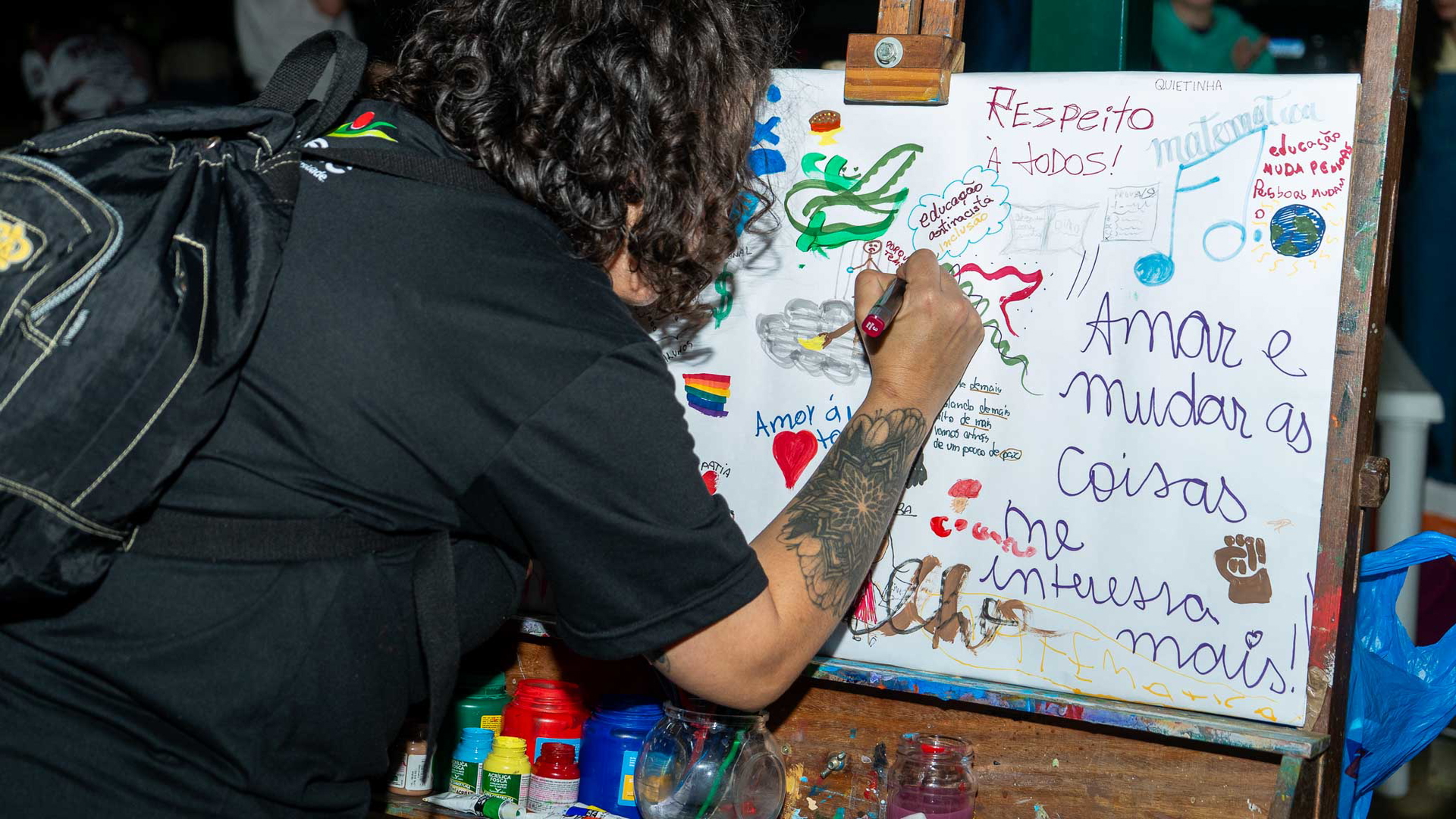
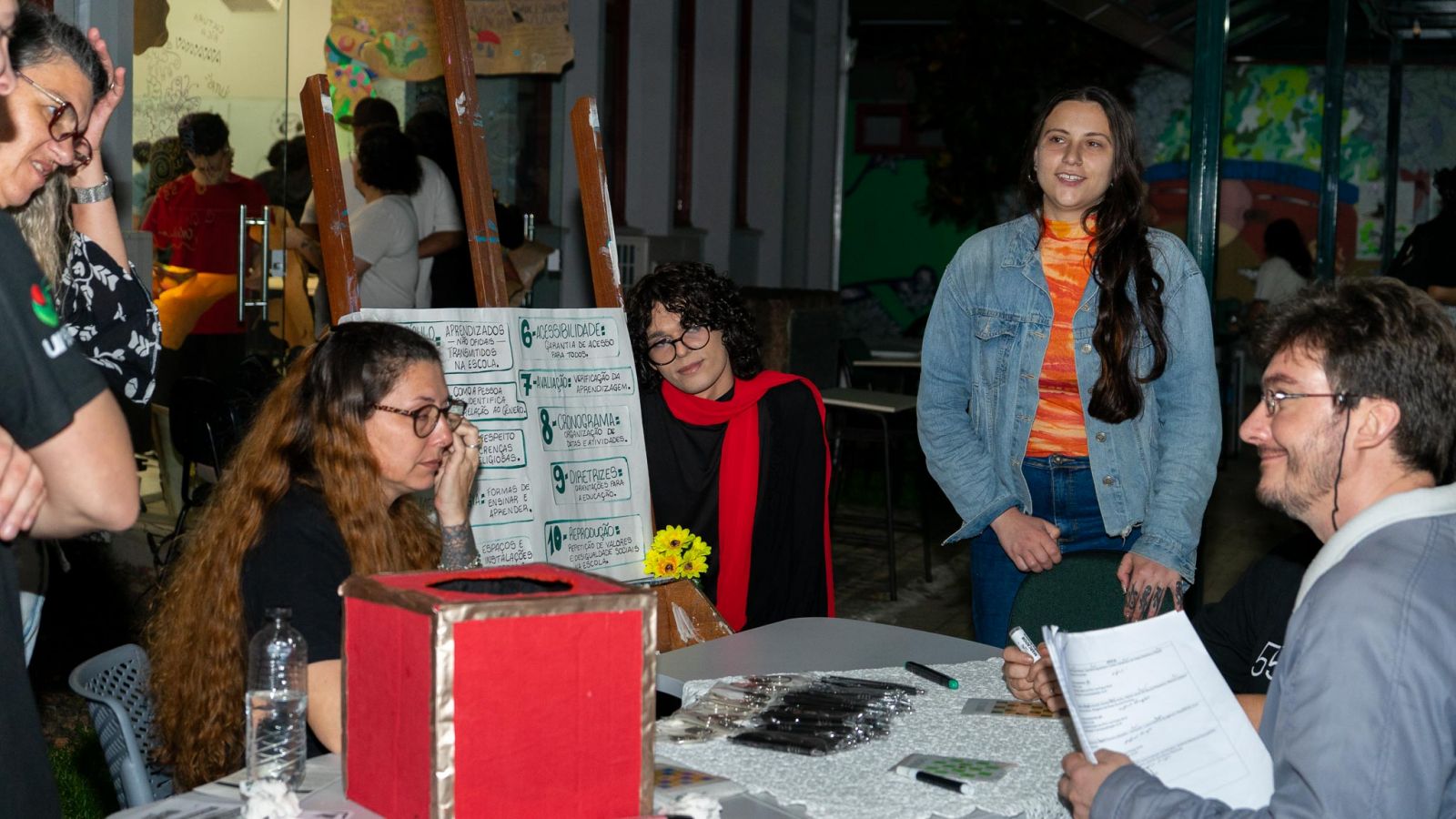 Art also found its place in the program. Júlia Cervinski Lourenço, a fourth-semester Arts – Licensure student, participated in an artistic intervention created from questions drawn by visitors. The proposal invited each person to express themselves through drawings, phrases, or thoughts.
"As artists, we thought about doing an intervention where people could feel free to create. We prepared questions related to teacher training, and from them, each person could respond with a phrase they liked, an idea of their own, or a drawing that showed who they are. The intention was to let the inner artist out and create their art," she explains.
Integration that leaves marks on training
PCC na Praça promotes integration among Licensure courses and allows students to relate the content studied to situations and possibilities of teaching practice. Throughout the course, subjects address different aspects of education, such as the teaching profession, the curriculum, the school, and the Political-Pedagogical Project (PPP).
Professor Aurélia Regina de Souza Honorato, a member of the Common Core committee of the Licensure programs, explains that the projects are developed throughout the semester and presented at this meeting, which represents the moment to share the results of the work.
"The PCC course is present from the first to the eighth semester. At the end of each semester, students present their productions, which focus on teacher training and address themes related to school practices. At each stage, a theme involves teacher training and the school, also considering the specificities of each course," she explains.
This edition had a special significance as it was the last PCC na Praça, which reached its ninth edition. The change occurs due to the update of the curricular matrices of the Licensure programs, following the new National Curriculum Guidelines (DCNs), which foresee other subjects and forms of organization for teacher training. 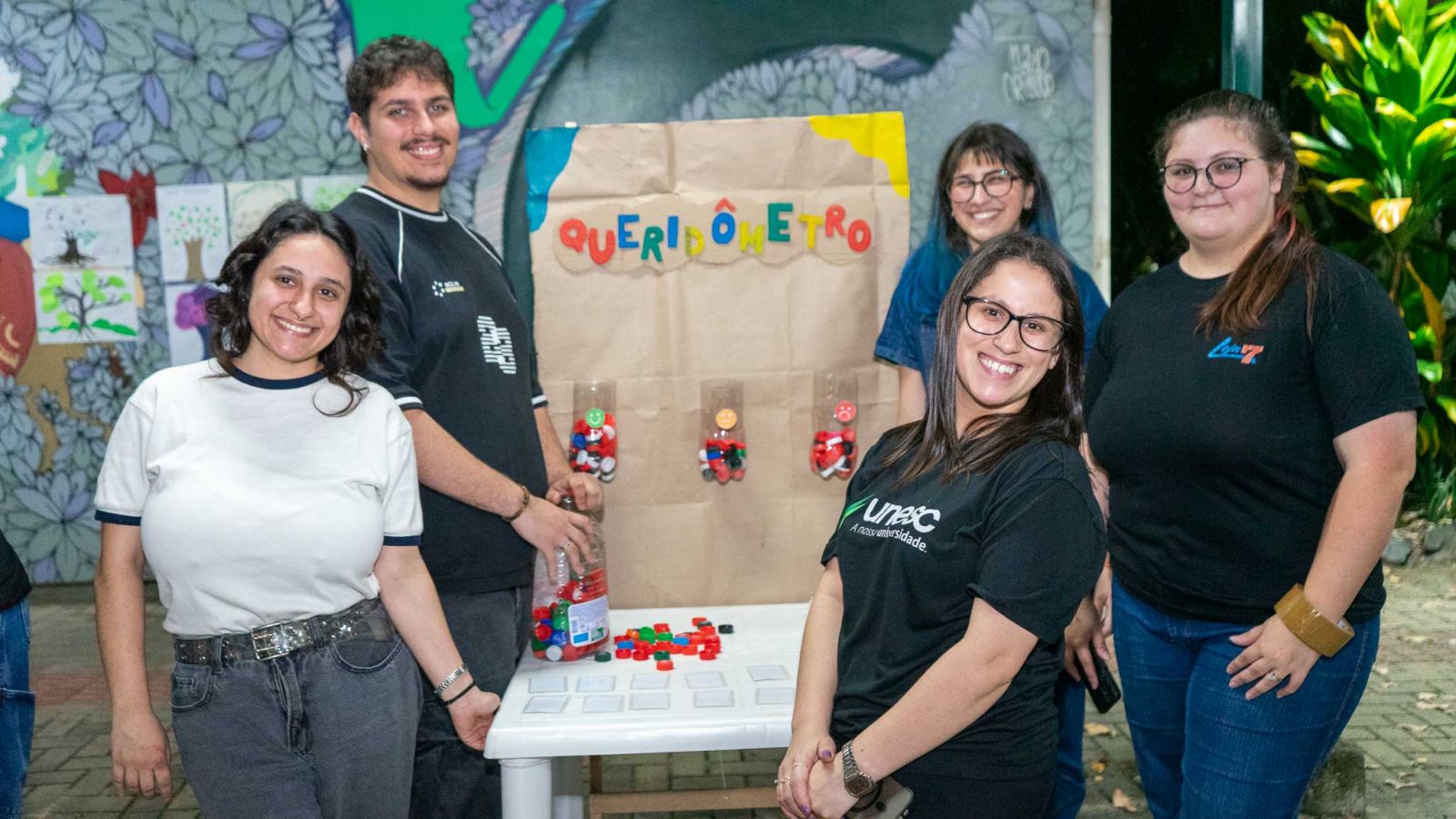
Aurélia emphasizes that, throughout the editions, the initiative built a unique identity among the courses. "There were nine editions in which we learned a lot. Today we recognize the identity that PCC na Praça has created, with this integration of the Licensure programs. Students acknowledge this, and the works presented show this relationship among them. They enjoy being here and are already feeling nostalgic about the event," she reports.
The professor also highlights that the exhibition represents the closure of a process built since the beginning of the semester. "Students develop activities in the five integrated subjects, with groups formed by students from different courses. The public presentation is the final stage of this journey, bringing together the knowledge produced and the experience of sharing ideas with others," the professor concluded.