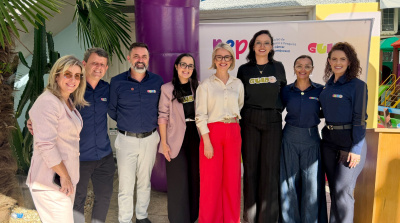
Pharmacy students at Unesc join a solidarity campaign

An initiative by the Academic Center of Pharmacy, in partnership with the Solidarity Pharmacy, mobilizes students and runs until November 19

Daniela Savi

Published by: Daniela Savi

on November 13, 2026

Reading time: 4 minutes.

Pharmacy students at Unesc join a solidarity campaign


Solidarity is also part of university education. With this purpose, the Academic Center of Pharmacy Alexander Fleming at Unesc, in partnership with the Solidarity Pharmacy of the University, promotes the Solidarity Principle Gincana. This initiative, taking place until next Thursday (11/19), mobilizes students from the Pharmacy program in a campaign to collect medications that can contribute to free healthcare for the community.

The proposal arose from the interaction between students and the Solidarity Pharmacy team, identifying an opportunity to unite academic integration and social responsibility. The gincana involves different classes from the Pharmacy program, participating in the collection according to the service's needs.

According to the president of the Academic Center, Rafael Ferrari, the action also aims to raise awareness about access to medications and the necessary care for these products.

“We realized that we could use the participation of students to contribute to the needs of the Solidarity Pharmacy. We want to show that pharmaceutical education also involves social responsibility, solidarity, and commitment to public health,” he emphasizes.

Donations undergo evaluation

The collected medications must meet the receiving criteria and the needs of the Solidarity Pharmacy. All donations are evaluated before being forwarded to the service, which checks the condition of the products and their usability.

According to the coordinator of the Solidarity Pharmacy, Eduardo Agnes, the project aims to promote free access to medications, contributing to the continuity of treatments and the rational use of these products.

Medications that meet the appropriate conditions are made available to the public, according to the service's criteria. Those that are expired or show changes in physical and organoleptic characteristics are destined for environmentally correct disposal.

Proper disposal is also a health concern

In addition to the collection, the gincana highlights the importance of proper medication disposal. Expired products or those no longer in use should not be thrown in regular trash, sinks, or toilets, as they can contaminate soil and water, causing environmental damage and public health risks.

The guidance is to seek appropriate collection points, such as pharmacies that accept expired or unused medications. It is also important not to share medications with others or use products past their expiration date or with compromised storage conditions.

Education that transforms into solidarity

For the vice president of the Academic Center, Maria Eduarda Semler, the expectation is to involve all students in the program, valuing not only the collection but also the learning provided by the experience.

“Every contribution makes a difference. This is an opportunity to put into practice what we have learned during our studies and demonstrate that small actions can have a positive impact on many people's lives,” she emphasizes.

The academic community can participate in the mobilization by contributing medications that meet the criteria established by the Solidarity Pharmacy. 

Also participating in the organization are: Ketlin da Rosa Pereira, Patrick Machado, Victoria Benedet Gastaldon, Maria Gabriela Lume Flores, Danielle Alves da Cunha, Larissa Araujo.

Copyright 2026 © UNESC. All rights reserved. Privacy Policy

Join the group